Books
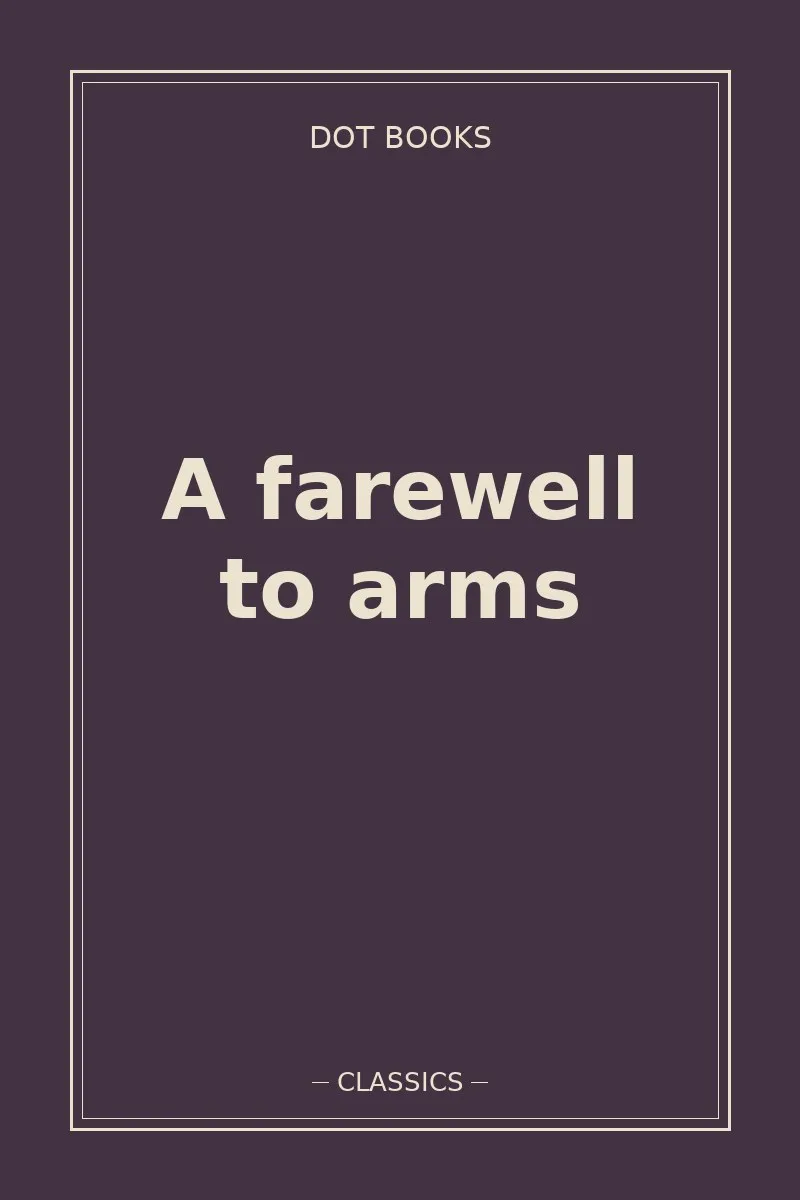
A farewell to arms.
Ernest Hemingway's stark, tender novel of love and war on the Italian front. An American ambulance driver and an English nurse seek a private peace as the world around them falls apart.
Choose an edition
Recommended for you.
Options and costs for your address appear at checkout
Send it back if it didn't land
Every book on the shelf has been read by at least one of us
Edition details
- Ernest Hemingway
- DotBooks
- DotBooks
- Paperback
- Standard white
- 175
- en
About this book
Spare, unflinching, and quietly devastating, this is Hemingway at the height of his powers, turning the chaos of war into a love story that has lost none of its ache.
What it's about
A Farewell to Arms follows Frederic Henry, an American serving as an ambulance driver with the Italian army during the First World War. Amid the boredom, danger, and disillusion of the front, he meets Catherine Barkley, an English nurse, and what begins almost casually deepens into a love that both cling to as the war grinds on around them. Drawing on Hemingway's own experience of the Italian campaign, the novel moves from the mud and retreat of the fighting toward a fragile attempt to build a life apart from it, in a world that offers little shelter to those who try to step out of the storm. The famous account of the great retreat forms one of its most powerful passages, a study of order dissolving into chaos.
Themes
War and love stand opposed here, one destroying, the other trying to protect. Hemingway writes about courage and its limits, about the numbing effect of endless violence, and about the search for meaning when the old certainties of glory and honour have curdled into empty words. The novel is haunted by chance and loss, by the sense that the world breaks people and that the good die as easily as anyone. Beneath its famously plain surface runs a deep current of tenderness and grief, and a stubborn insistence on the value of the small, private happiness that the world seems determined to deny.
Why it still matters
This is one of the defining novels of the twentieth century, both for what it says about the First World War and for how it says it. Hemingway's stripped-down prose, built from short declarative sentences and hard concrete detail, changed the sound of English fiction and still influences writers today. As an anti-war statement it remains piercing precisely because it never lectures; it simply shows what the fighting costs, and lets the cost speak for itself. Readers coming to it now will find a book that feels startlingly modern and emotionally direct, its restraint only sharpening its power.
Who it's for
It belongs on the shelf of anyone serious about modern literature, and it speaks with special force to readers drawn to war writing that refuses to glamorise. Those who love clean, understated prose will study its every line. And anyone who has loved someone against a backdrop of upheaval will recognise the private world these two try, and struggle, to hold on to against everything set against them.
Sources and references
Verified references for this edition: Open Library, WorldCat.
Story preview
Tap to flip through the photos and the key points.
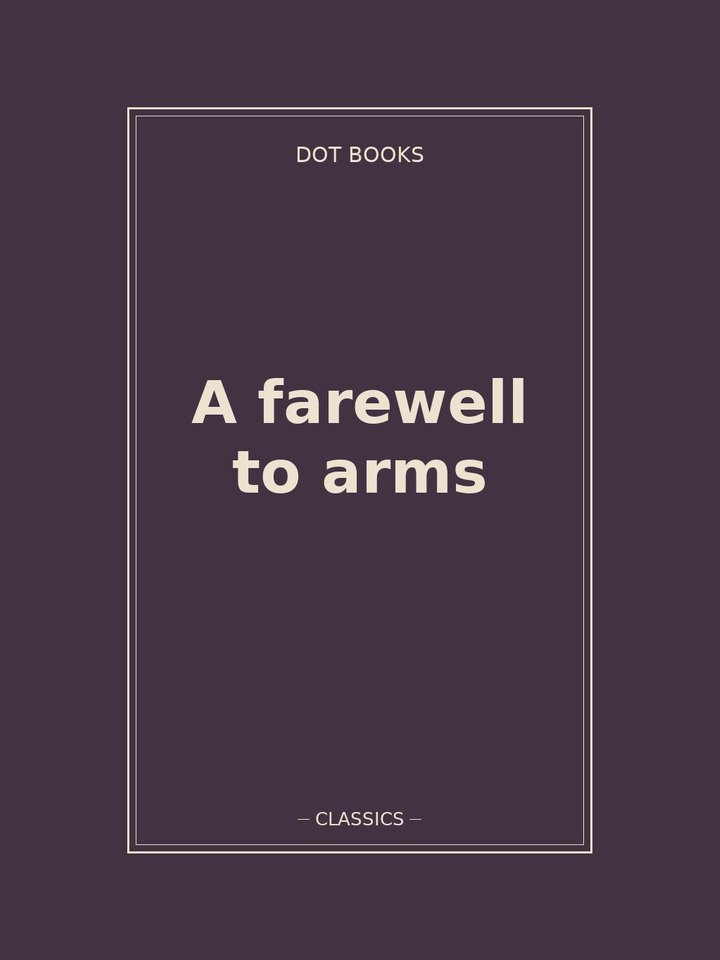 A farewell to arms
You might also like
Readers who picked this also reached for.

Picking up where you left off