Books
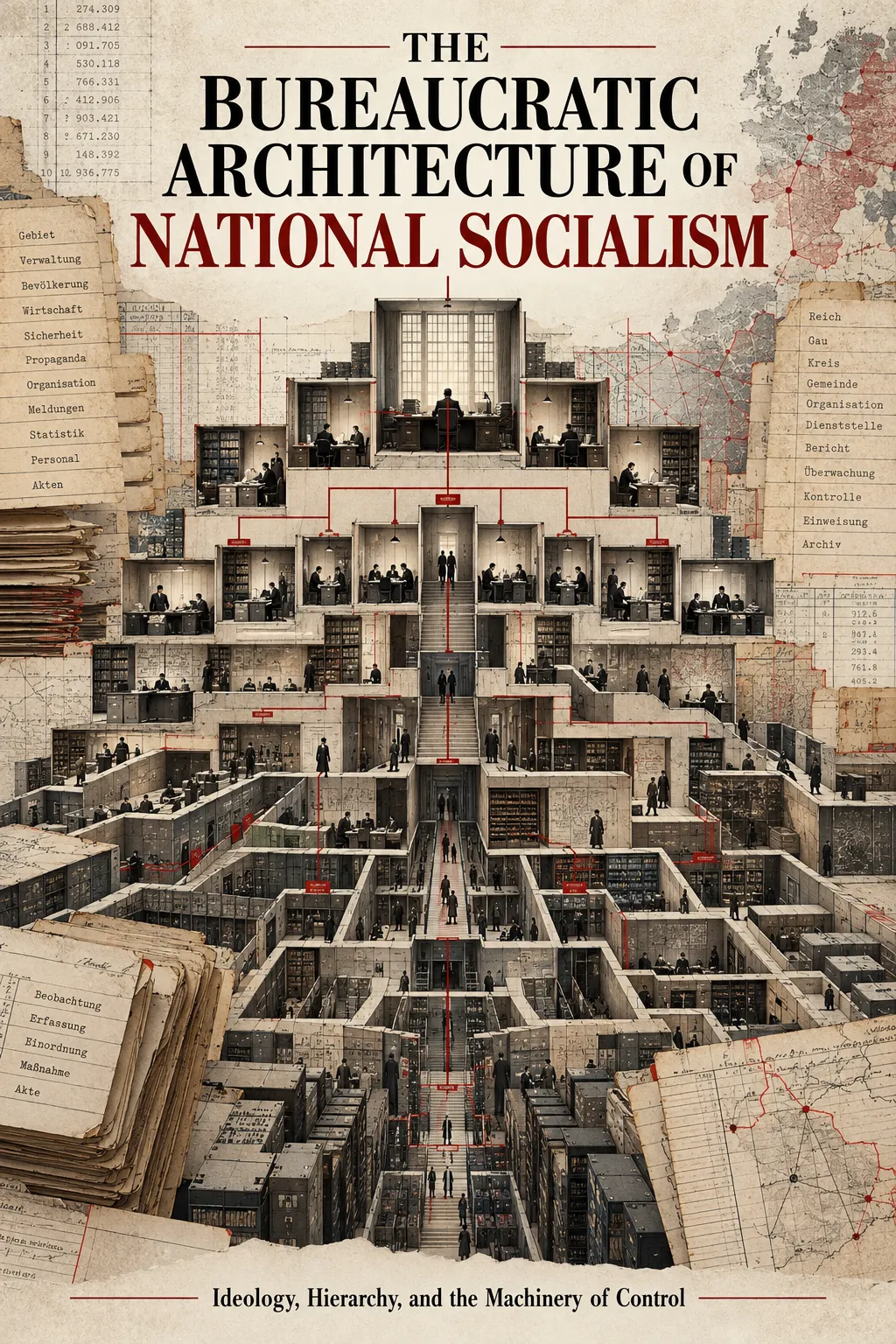
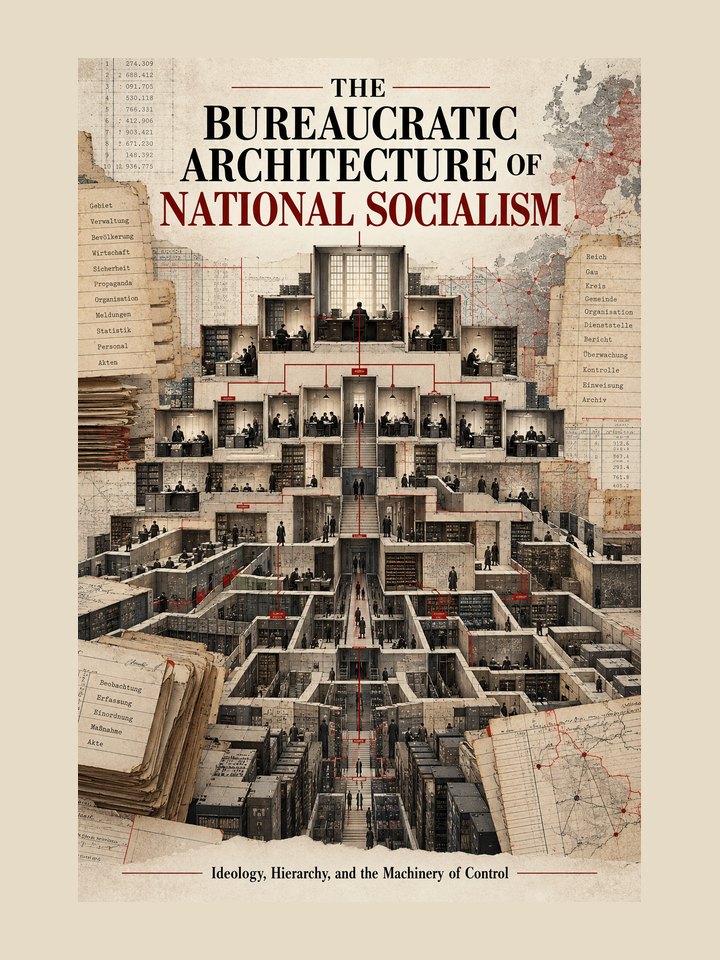
The Bureaucratic Architecture of National Socialism.
A rigorously contextualized study of how the Nazi Party translated ideology into hierarchy, territorial control, mass organizations, surveillance, and visual bureaucracy.
Choose an edition
Recommended for you.





Options and costs for your address appear at checkout
Send it back if it didn't land
Every book on the shelf has been read by at least one of us
Edition details
- DotBooks.store Research Editions
- DotBooks.store
- DotBooks Research Editions
- August 2026
- Hardcover
- Standard white
- 500
- English
- Critical research edition
- DotBooks Research Editions
About this book
A critical research edition—not a reproduction or endorsement of Nazi propaganda.
The Bureaucratic Architecture of National Socialism examines the 1943 Organisationsbuch der NSDAP as evidence of how dictatorship becomes organizational practice. Across twenty focused sections, the report analyzes the Party’s hierarchy, territorial cells, political leadership system, party-state overlap, mass organizations, labor and welfare structures, youth and gender policy, surveillance networks, symbolic administration, racial governance, and wartime performance of institutional permanence.
Organization as an instrument of domination
The source handbook presented ranks, offices, maps, uniforms, flags, regulations, affiliated formations, and reporting relationships as neutral administrative order. This study reads those systems against the grain. It shows how bureaucratic precision helped extend ideological authority into neighborhoods, workplaces, families, schools, professions, and municipal government—and how inclusion in the imagined national community depended on racial exclusion, coercion, persecution, and violence.
Grounded in the archival artifact
The analysis is based on the United States Holocaust Memorial Museum scan hosted by Internet Archive: 856 captured images and 854 access/OCR pages. It documents provenance, derivative-file structure, representative leaves, and the severe limitations of machine OCR applied to Fraktur typography. Quotations and exact page references must therefore be checked against scan images.
Responsible historical framing
The report includes a content warning, source-method discussion, copyright and reuse assessment, research references, digital artifact profile, structural samples, and verification notes. It neither reproduces the full 1943 handbook nor uses extremist imagery for merchandising. The original archival edition has unresolved commercial-reuse questions and is not included with this product.
For readers of
- Modern European and German history
- Holocaust and genocide studies
- Political institutions and authoritarianism
- Propaganda, bureaucracy, and surveillance
- Archival methods and responsible source criticism
Format: 14-page optimized PDF research edition, including blank opening page and DotBooks imprint.
Story preview
Tap to flip through the photos and the key points.
 The Bureaucratic Architecture of National Socialism
You might also like
Readers who picked this also reached for.




Picking up where you left off