Books
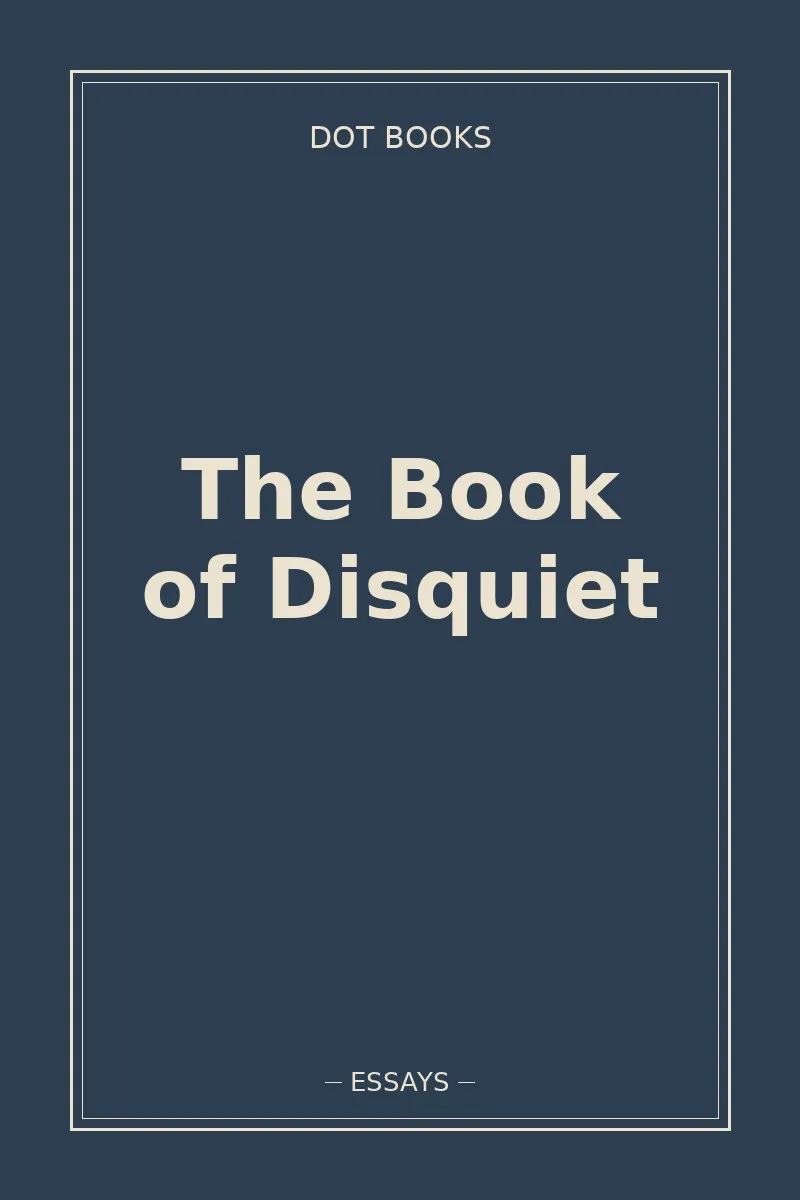
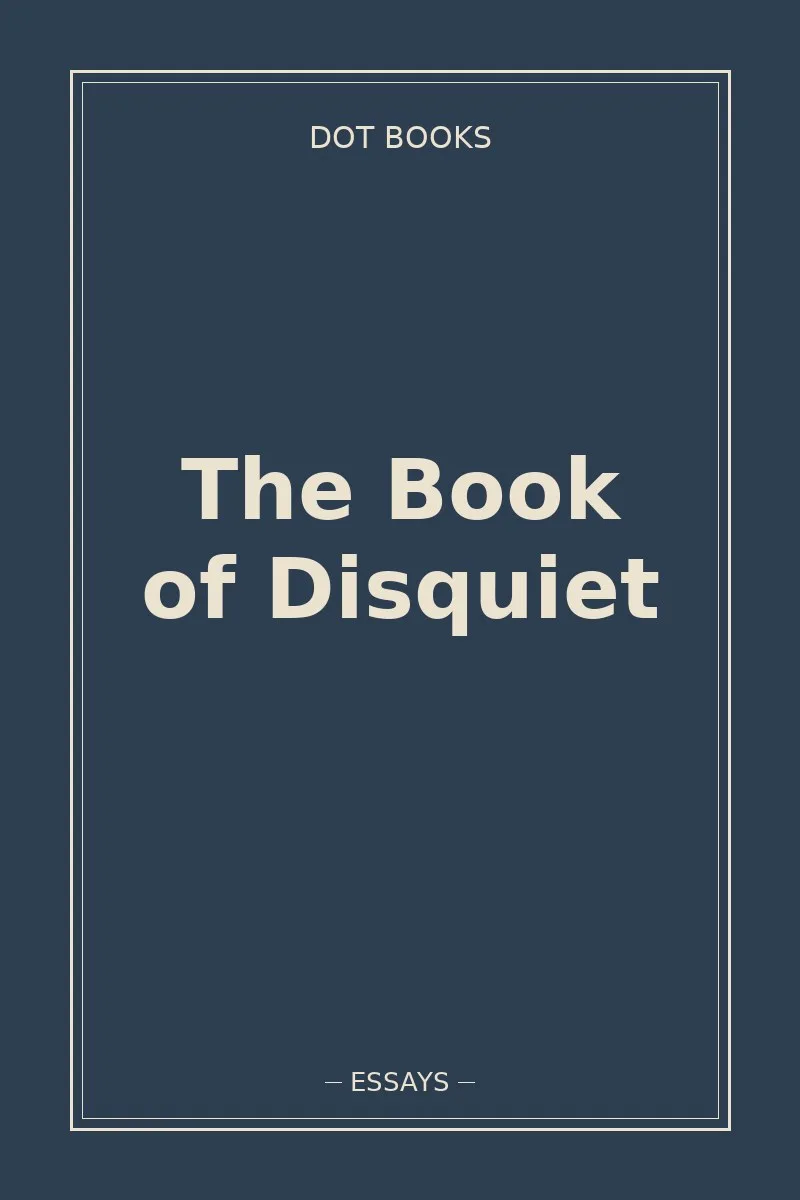
The Book of Disquiet.
Fernando Pessoa's fragmentary masterpiece gathers the musings of a Lisbon clerk into an unclassifiable anti-novel, a shimmering diary of solitude, dream and the strangeness of simply being alive.
Recommended for you.





Tracked, signed-for delivery on every order
Send it back if it didn't land
Every book on the shelf has been read by at least one of us
About this book
A humble assistant bookkeeper in Lisbon goes about his unremarkable days, and in the quiet of his rented room writes down the vast, drifting inner life that no one around him will ever suspect he possesses.
What it's about
The Book of Disquiet is less a novel than a life's accumulation of fragments, attributed by Fernando Pessoa to Bernardo Soares, one of his many invented authorial selves. Left unfinished and unordered at his death, it collects reflections, prose poems and diary-like passages on solitude, boredom, dreaming and perception. There is almost no plot; instead there is a single restless consciousness, turning the ordinary over and over until it glows with strangeness.
Themes
The book meditates on solitude and alienation, the multiplicity and instability of the self, the superiority of dream to action, and the peculiar melancholy of modern city life. Identity here is fluid and plural, and the act of observing one's own mind becomes both refuge and torment.
Why it still matters
Assembled and published only decades after Pessoa's death, it has come to be recognised as one of the great works of modernist literature. Its fragmentary form now feels prophetic, and its unflinching attention to consciousness speaks intimately to anyone who has ever felt like a stranger inside their own life.
Who it's for
For readers drawn to modernism, philosophy and the inward turn, for lovers of aphorism and prose poetry, and for anyone content to read a book slowly, a page at a time, for the beauty of its thought.
Story preview
Tap to flip through the cover, snippets, and details.
 The Book of Disquiet
You might also like
Readers who picked this also reached for.



Picking up where you left off