Books
The Comedies of Terence: Literally Translated into English Prose, with Notes.
The six surviving comedies of Rome's most elegant playwright, rendered into plain English prose with helpful notes. Mistaken identities, scheming servants, and thwarted young lovers, from the poet Julius Caesar praised for his pure Latin.
Recommended for you.
Options and costs for your address appear at checkout
Send it back if it didn't land
Every book on the shelf has been read by at least one of us
About this book
Two thousand years before the sitcom, a freed North African slave in Rome was perfecting the art of the domestic tangle, the long-lost child, and the servant who knows more than his master. Terence's comedies have never stopped teaching what a well-made plot can do.
What it's about
This volume gathers the six comedies of Publius Terentius Afer, better known as Terence, in a faithful English prose translation with explanatory notes. Written in the second century BCE for the Roman stage, the plays adapt Greek models into something distinctly Terence's own: The Girl from Andros, The Self-Tormentor, The Eunuch, Phormio, The Mother-in-Law, and The Brothers. Each turns on the familiar machinery of ancient comedy, young men in love against their fathers' wishes, clever slaves, courtesans, and misunderstandings that resolve only in the final scene, but Terence handles it with a lightness and humanity that set him apart from his rowdier predecessor Plautus.
Themes
Beneath the farce runs a steady interest in how families forgive one another and how the generations misjudge each other's hearts. Fathers and sons, strict discipline against indulgence, the rights of the powerless, and the famous line that gave us a motto for humanism, that nothing human is foreign to me, all belong to Terence. The notes help the modern reader catch the social textures of Roman life that the plays assume.
Why it still matters
Terence's refined Latin made him a schoolroom staple for centuries, shaping the prose of writers from the Church Fathers to the Renaissance. His plots were quarried by Moliere and Shakespeare, and his structural elegance still underlies the romantic comedy. To read him is to visit the wellspring of a whole comic tradition.
Who it's for
For students of classics and drama, for lovers of comedy curious about its ancient roots, and for anyone who enjoys watching a tightly wound plot spring open. The plain-prose translation and its notes make an ancient master genuinely approachable.
Story preview
Tap to flip through the photos and the key points.
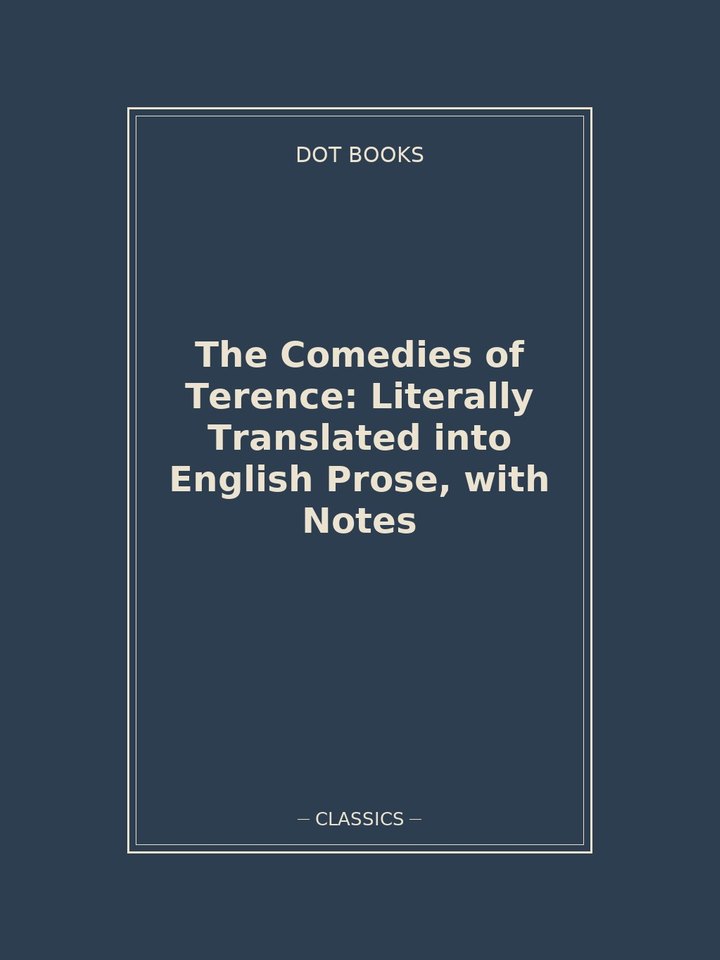 The Comedies of Terence: Literally Translated into English Prose, with Notes
You might also like
Readers who picked this also reached for.
Picking up where you left off