Books
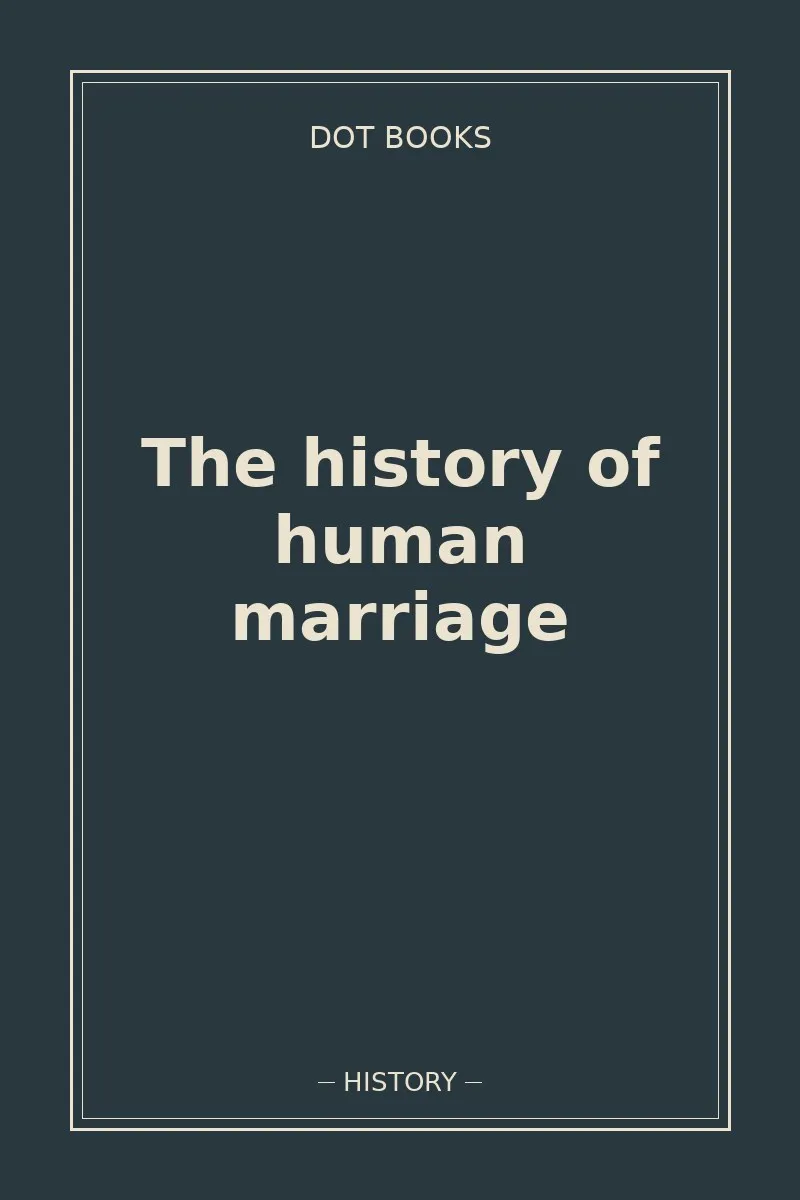
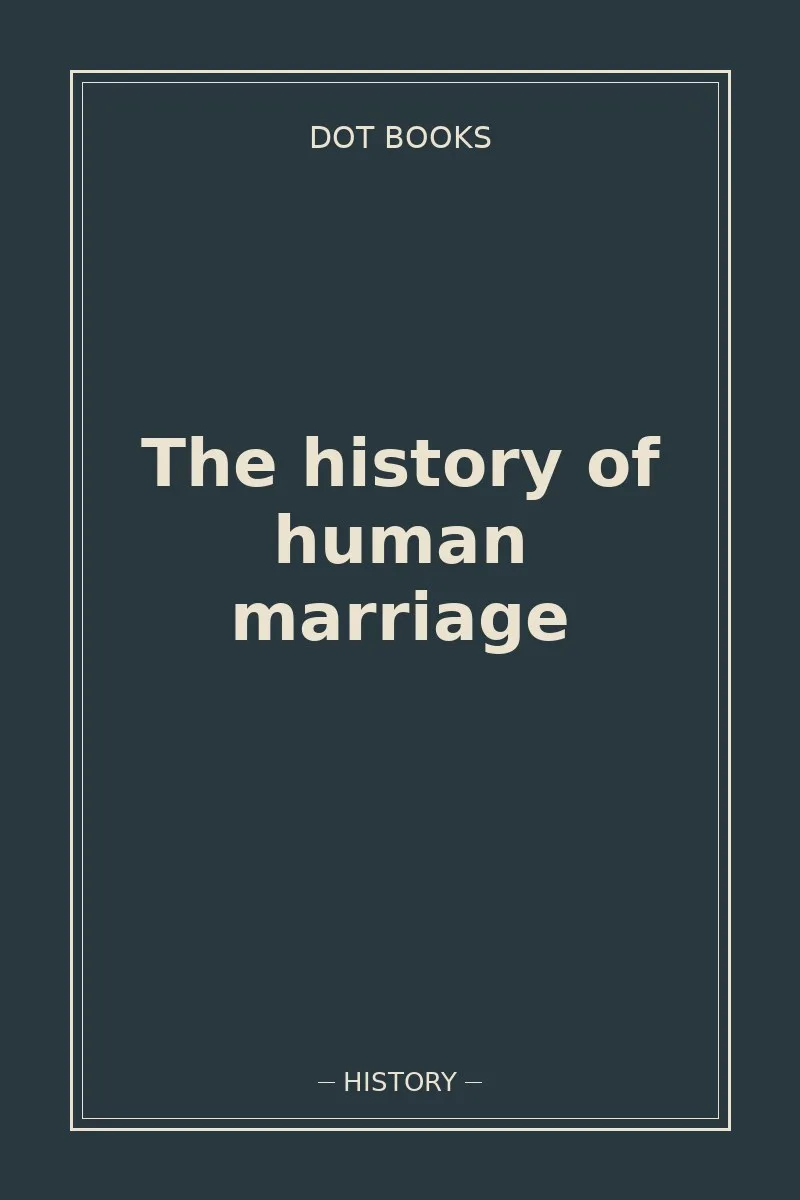
The history of human marriage.
Edward Westermarck's landmark study tracing the origins and development of marriage across human societies. A pioneering work of anthropology that challenged prevailing theories with wide-ranging evidence and careful argument.
Choose an edition
Recommended for you.

Tracked, signed-for delivery on every order
Send it back if it didn't land
Every book on the shelf has been read by at least one of us
About this book
When Edward Westermarck published his great study of marriage, he set out to bring rigour and evidence to questions that had been settled largely by speculation. The result became a foundational text in the young science of anthropology and reshaped debate about the origins of human institutions.
What it's about
The work surveys marriage across an enormous range of human societies, examining courtship, the forms marriage takes, and the customs that surround it. Westermarck marshals comparative evidence to argue against the then-fashionable theory of primitive promiscuity, proposing instead that pair bonding has deep roots in human nature.
Themes
The interplay of instinct and custom, the diversity of human social arrangements, and the tension between biological and cultural explanation run throughout. Westermarck's method — building conclusions from broad comparison rather than assumption — is itself part of the book's importance.
Why it still matters
The study helped establish comparative anthropology and introduced ideas, including the aversion linked to close childhood association, that continue to be discussed today. It remains a monument of nineteenth-century social science and a reference point in the study of kinship.
Who it's for
Students of anthropology, sociology, and the history of ideas, and readers interested in the deep origins of human social life.
Story preview
Tap to flip through the cover, snippets, and details.
 The history of human marriage
You might also like
Readers who picked this also reached for.

Picking up where you left off