Books
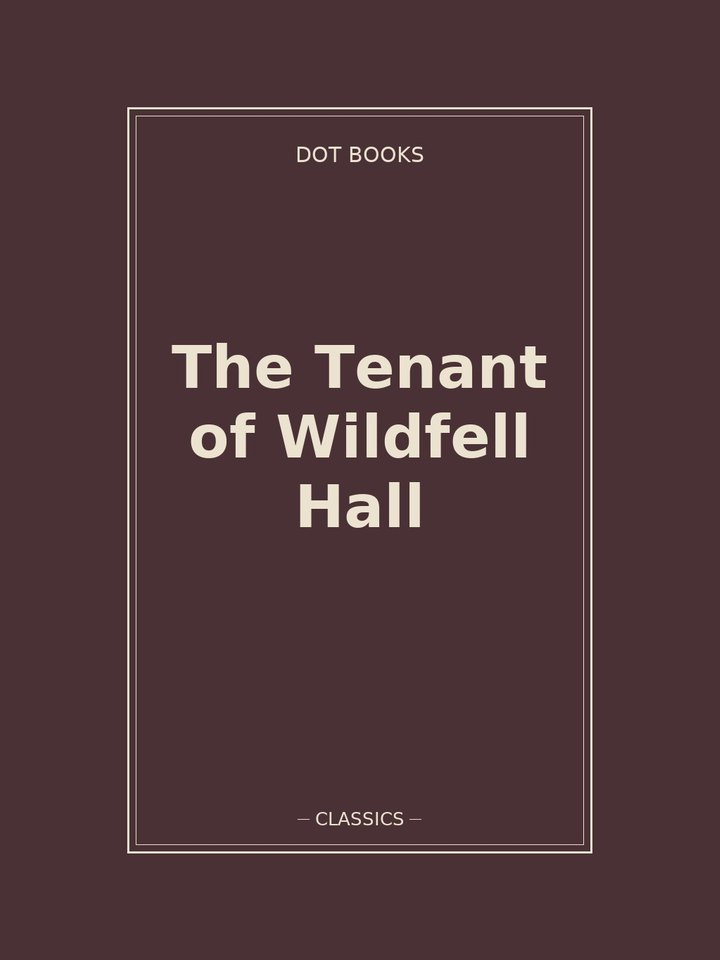
The Tenant of Wildfell Hall.
Anne Brontë's bold second novel follows a secretive young widow who arrives at a crumbling hall, and the diary that reveals why she fled her marriage. A frank, morally serious study of addiction and a woman's right to leave.
Choose an edition
Recommended for you.
Options and costs for your address appear at checkout
Send it back if it didn't land
Every book on the shelf has been read by at least one of us
Edition details
- Anne Brontë
- DotBooks
- Paperback
- Standard white
- 696
- en
About this book
A guarded young woman and her small son take up residence in the half-ruined Wildfell Hall, keeping to themselves and inviting the suspicion and gossip of the neighbourhood. When a local farmer's curiosity turns to love, the truth of her past emerges through the pages of her own diary, and Anne Brontë's most daring novel opens out into something startlingly honest for its time. Where her sisters reached for the romantic and the gothic, Anne turned a steady, unsentimental gaze on a subject most of her contemporaries preferred to keep behind closed doors.
What it's about
Helen Graham, the mysterious tenant, is watched and courted by Gilbert Markham, whose narration frames the book. At its heart lies Helen's private journal, which lays bare her marriage to the charming, dissolute Arthur Huntingdon and her slow, painful reckoning with his drinking, his infidelity, and his gradual moral ruin. As Huntingdon's decline threatens to drag their young son down with him, Helen makes a choice that the law and custom of her day were expressly designed to forbid, fleeing her husband to protect her child and support herself in secret. The framing device lets us see both the scandalised surface of village opinion and the hard reality beneath it.
Themes
Brontë writes unflinchingly about alcoholism, marital breakdown, and the moral duty a mother owes both her child and herself. She directly challenges the era's comfortable faith that a virtuous wife could love a bad husband into reform, showing instead the corrosive cost of staying, and insists on a woman's right to independence, property, and self-respect. Questions of education, example, and how character is formed in the young run steadily beneath the domestic drama.
Why it still matters
Often overshadowed by Jane Eyre and Wuthering Heights, Anne Brontë here proves the most socially radical of the three sisters. The novel's clear-eyed treatment of addiction and of a wife's legal helplessness reads as remarkably modern, and its argument for female autonomy has lost none of its force. It was controversial on publication precisely because it told the truth plainly, and that plain truth is exactly what keeps it alive.
Who it's for
For readers of the Brontës who want the least sentimental and most argumentative of their works, for anyone drawn to nineteenth-century fiction with a sharp ethical spine, and for those who admire heroines who refuse to be rescued and set about rescuing themselves instead.
Story preview
Tap to flip through the photos and the key points.
 The Tenant of Wildfell Hall
You might also like
Readers who picked this also reached for.
Picking up where you left off