Books
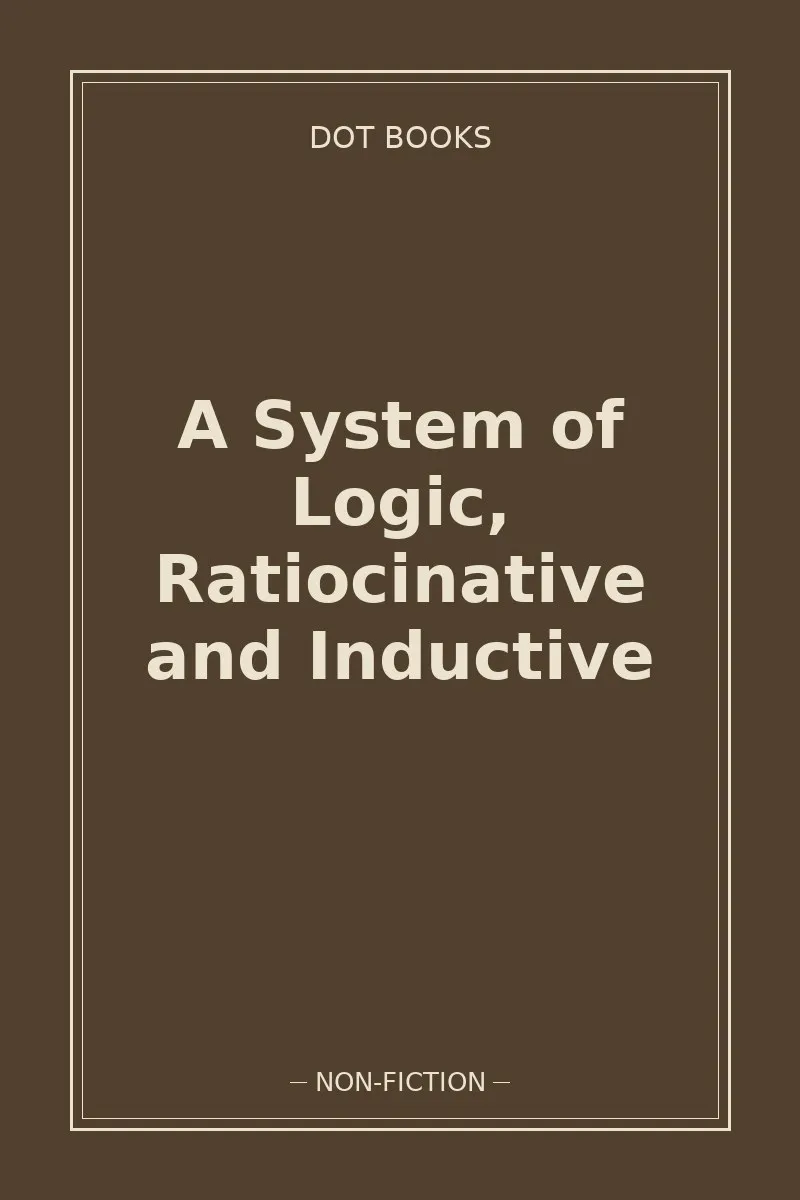
A System of Logic, Ratiocinative and Inductive.
John Stuart Mill's foundational treatise on reasoning, evidence, and the methods of science. A landmark of nineteenth-century philosophy that shaped how we think about induction, causation, and the logic of the empirical world.
Recommended for you.


Options and costs for your address appear at checkout
Send it back if it didn't land
Every book on the shelf has been read by at least one of us
About this book
Few books have done more to shape how the modern mind reasons about evidence, and Mill wrote this one with the patient ambition of someone trying to map the whole territory of thought.
What it's about
This is John Stuart Mill's great treatise on the logic of reasoning, both deductive and, above all, inductive. Mill sets out to explain how we move from particular observations to general conclusions, how we test claims against experience, and how the sciences arrive at reliable knowledge of the world. Along the way he formulates his famous methods for identifying causes, the canons of induction that students of logic still learn today, and he argues for a thoroughgoingly empirical account of how we come to know anything at all.
Themes
At its heart the book is about the relationship between mind and evidence. Mill insists that knowledge grows from experience rather than from innate ideas, and he works out the consequences of that conviction across logic, language, mathematics, and the moral sciences. Questions of causation, proof, and the reliability of generalization run throughout, always in the service of a confident, reforming faith in reason.
Why it still matters
Mill's work remains a cornerstone of the philosophy of science and of empiricism more broadly. His methods of induction still appear in textbooks, and his defense of experience as the ground of knowledge continues to frame debates about how science justifies its claims. To read him is to encounter one of the clearest and most influential minds of the nineteenth century working at full stretch.
Who it's for
Students of philosophy, logic, and the history of science will find this essential, but so will any thoughtful reader curious about how we know what we claim to know. It asks patience and rewards it with lasting clarity.
Story preview
Tap to flip through the photos and the key points.
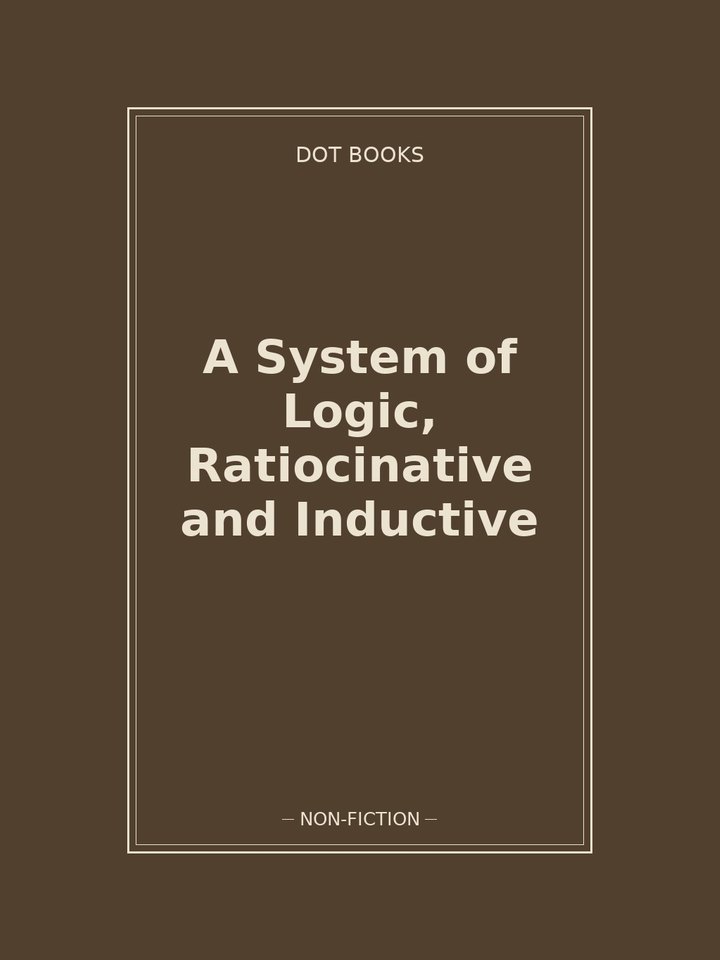 A System of Logic, Ratiocinative and Inductive
You might also like
Readers who picked this also reached for.



Picking up where you left off