Books
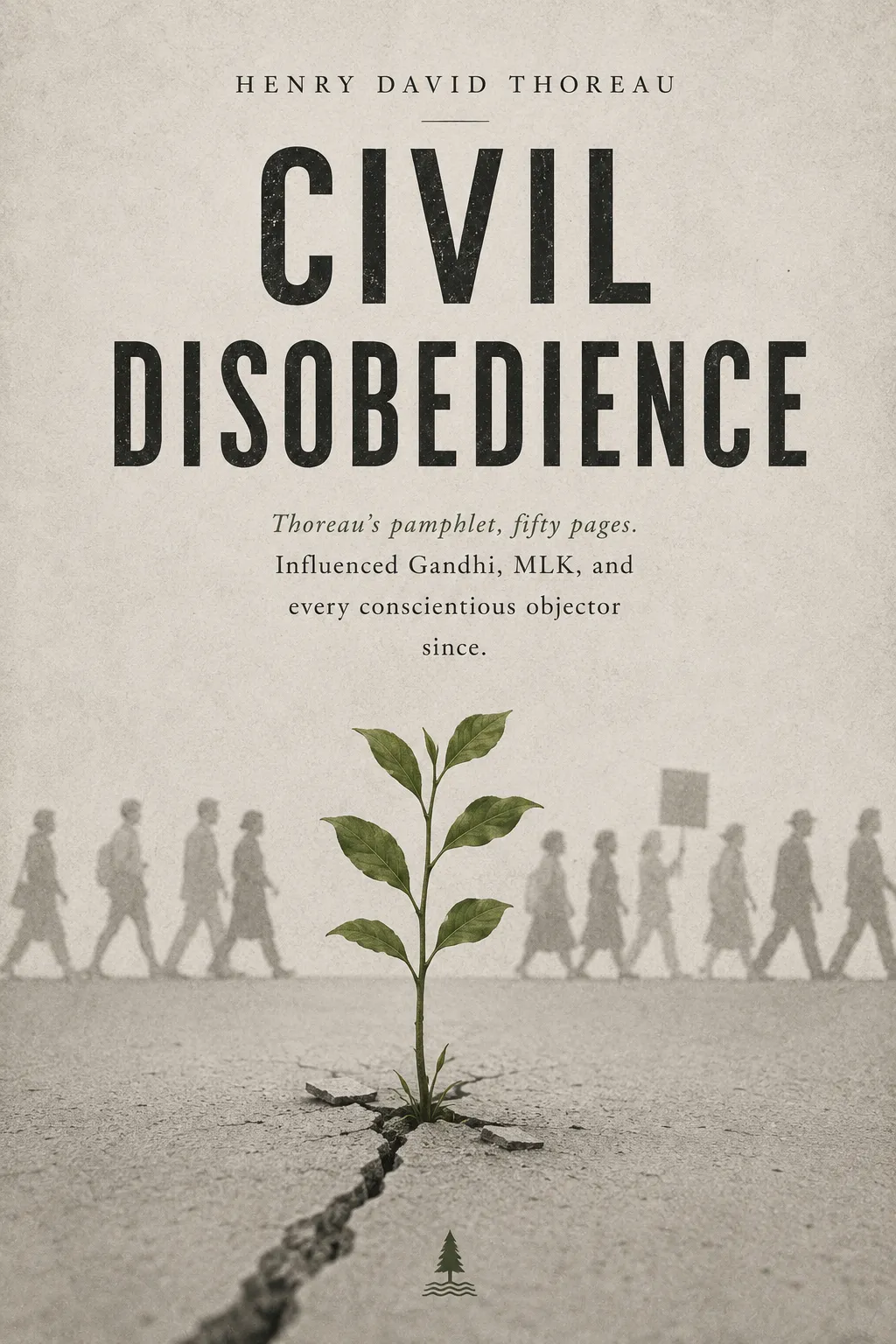
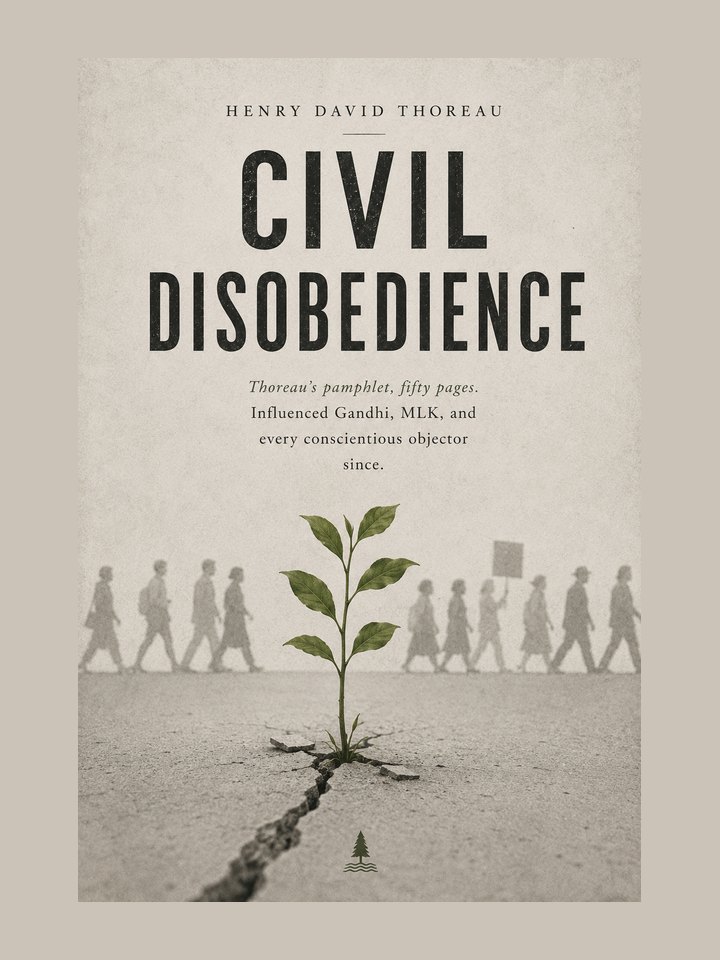
Civil Disobedience.
In 'Civil Disobedience,' Thoreau’s impassioned essay challenges readers to question authority and act on conscience. A rallying cry against injustice, it remains a provocative guide for those who believe in the power of individual resistance.
Choose an edition
Recommended for you.

Options and costs for your address appear at checkout
Send it back if it didn't land
Every book on the shelf has been read by at least one of us
Edition details
- Henry David Thoreau
- DotBooks
- Paperback
- Standard white
- 12
- en
Featured in
About this book
Thoreau’s 'Civil Disobedience' is a fiery manifesto that refuses to let complacency off the hook. Written in 1849, it’s a bold declaration of moral independence, urging readers to resist unjust laws and systems. Thoreau’s voice is sharp, unyielding, and deeply personal, making this essay feel as urgent today as it did over a century ago.
What it's about
Thoreau wrote 'Civil Disobedience' after spending a night in jail for refusing to pay a poll tax that supported slavery and the Mexican-American War. The essay is a passionate argument for individual conscience over blind obedience to the state. Thoreau asserts that citizens have a duty to resist unjust laws, even if it means breaking them. He critiques government inefficiency and corruption, advocating for a minimalist state that respects individual freedom. The essay is both a personal reflection and a broader call to action, blending philosophy with practical advice.
Themes
The central theme of 'Civil Disobedience' is the moral obligation to resist injustice. Thoreau argues that individuals must act according to their conscience, even when it conflicts with the law. He emphasizes the importance of personal responsibility and the power of nonviolent resistance. Another key theme is the critique of government, which Thoreau views as often corrupt and inefficient. He advocates for a government that serves the people rather than controlling them. Finally, Thoreau explores the idea of individualism, urging readers to think for themselves and live authentically.
Why it still matters
'Civil Disobedience' remains a cornerstone of political philosophy and activism. Its ideas have inspired movements for civil rights, environmental justice, and anti-war protests. Thoreau’s emphasis on individual conscience and nonviolent resistance continues to resonate in a world grappling with systemic inequality and authoritarianism. The essay challenges readers to question authority and take responsibility for their actions, making it a timeless guide for ethical living. Its relevance is underscored by its influence on figures like Gandhi and Martin Luther King Jr., who drew on Thoreau’s ideas in their own struggles for justice.
Who it's for
This essay is for readers who are passionate about social justice, political philosophy, and the power of individual action. It appeals to those who enjoy thought-provoking, concise writing that challenges conventional wisdom. Fans of Emerson, Gandhi, or King will find Thoreau’s ideas familiar yet distinct. It’s also ideal for anyone seeking inspiration to stand up for their beliefs in the face of injustice. Whether you’re a seasoned activist or a curious thinker, 'Civil Disobedience' offers a compelling call to action.
On reading it now
In 2026, 'Civil Disobedience' feels more relevant than ever. As debates about government overreach, climate justice, and social inequality dominate the public sphere, Thoreau’s call to resist unjust systems resonates deeply. His emphasis on individual responsibility and moral courage offers a refreshing antidote to apathy and complacency. Reading it now, one can’t help but see parallels to contemporary struggles, making Thoreau’s words a timely reminder of the power of principled resistance.
Related reading
If this resonates, you might also reach for The Souls of Black Folk or Walden.
Sources and references
Verified references for this edition: Open Library, WorldCat, Henry David Thoreau on Wikipedia.
Story preview
Tap to flip through the photos and the key points.
 Civil Disobedience
You might also like
Readers who picked this also reached for.

Picking up where you left off