Books
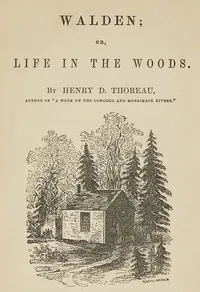
Walden.
Thoreau's 'Walden' is a quiet rebellion against the noise of civilization, a year spent in deliberate solitude by a pond where time bends to the rustle of leaves and the call of loons. Here, simplicity becomes revelation, and the mundane glows with quiet, stubborn wisdom.
Choose an edition
Recommended for you.


Options and costs for your address appear at checkout
Send it back if it didn't land
Every book on the shelf has been read by at least one of us
Edition details
- Henry David Thoreau
- DotBooks
- DotBooks
- Paperback
- Standard white
- 136
- en
Featured in
About this book
In the hush of Walden Pond, Thoreau builds not just a cabin but a lens—through which the clutter of 19th-century life falls away, revealing the raw pulse of existence. His experiment in radical simplicity becomes an unexpected mirror for our own restless modernity.
What it's about
Over two years, two months, and two days, Thoreau chronicles his retreat to a self-built cabin on Ralph Waldo Emerson's woodland property. The narrative unfolds like a seasonal almanac, tracking ice melting on the pond, bean rows flourishing then withering, and the quiet dramas of animal neighbors. But this is no pastoral idyll—each observation spirals into sharp critiques of industrialization, consumerism, and the illusion of progress. The book's heartbeat is its paradox: by stepping away from society, Thoreau engages more deeply with its unspoken assumptions.
Themes
At its core, 'Walden' interrogates the true cost of civilization's comforts. Thoreau measures his life not in possessions but in hours spent watching ants wage war or listening to the harmonics of train whistles across water. Self-reliance emerges not as rugged individualism but as deliberate interdependence with nature's systems. Most radical is his insistence on slowness as resistance—a theme that predates modern mindfulness by 170 years yet feels freshly subversive in our age of distraction.
Why it still matters
In an era of climate crisis and digital overload, 'Walden' reads less like nostalgia and more like a survival manual. Thoreau's meticulous accounting of nature's economy—where nothing is wasted and everything has purpose—resonates with contemporary sustainability movements. His critique of 'improved means to unimproved ends' anticipates our fraught relationship with technology. The book endures because it asks the question we still evade: how much is enough?
Who it's for
Ideal for seekers weary of self-help platitudes, readers who underlined passages in Braiding Sweetgrass or Pilgrim at Tinker Creek. It rewards those willing to read slowly, to sit with contradictions—a book equally cherished by environmental activists, minimalist designers, and philosophers tracing the roots of civil disobedience. Pair with Annie Dillard's essays or Wendell Berry's poetry.
On reading it now
In 2026, as AI-generated content floods our screens, Thoreau's hand-built sentences feel like artifacts from another world. His deliberate pace becomes radical counterprogramming to algorithmic attention economies. The pandemic years gave new urgency to his questions about isolation and community—making 'Walden' not a relic but a compass for navigating what he called 'this restless, nervous, bustling trivial Nineteenth Century' (which could easily be our own).
Related reading
If this resonates, you might also reach for Civil Disobedience or The Souls of Black Folk.
Sources and references
Verified references for this edition: Open Library, WorldCat, Henry David Thoreau on Wikipedia.
Story preview
Tap to flip through the photos and the key points.
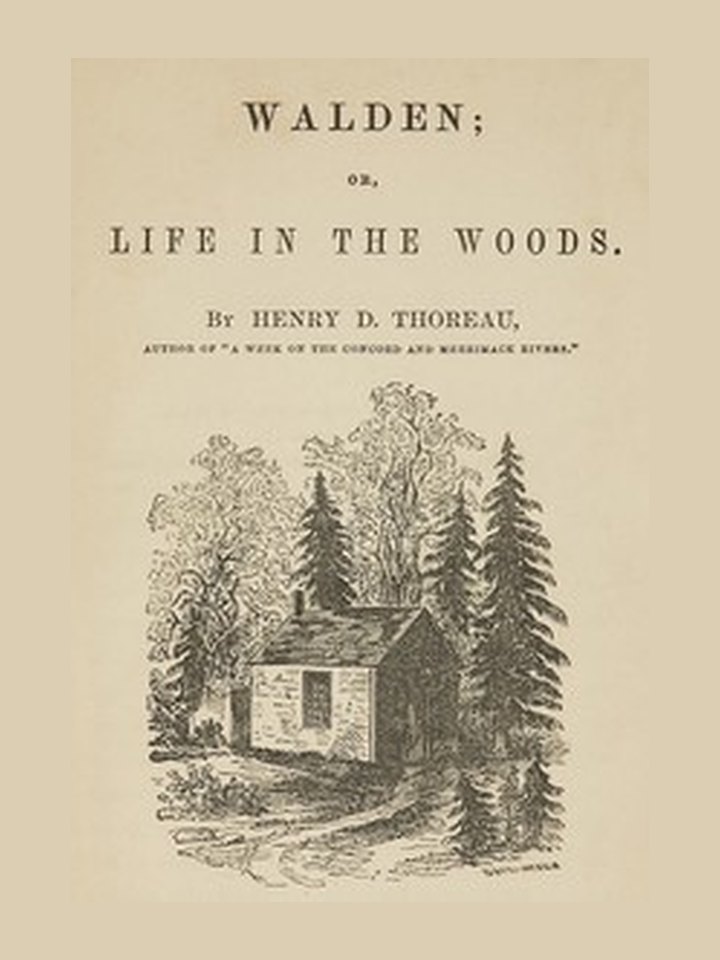 Walden
You might also like
Readers who picked this also reached for.




Picking up where you left off