



"This is sooo great book"
Books
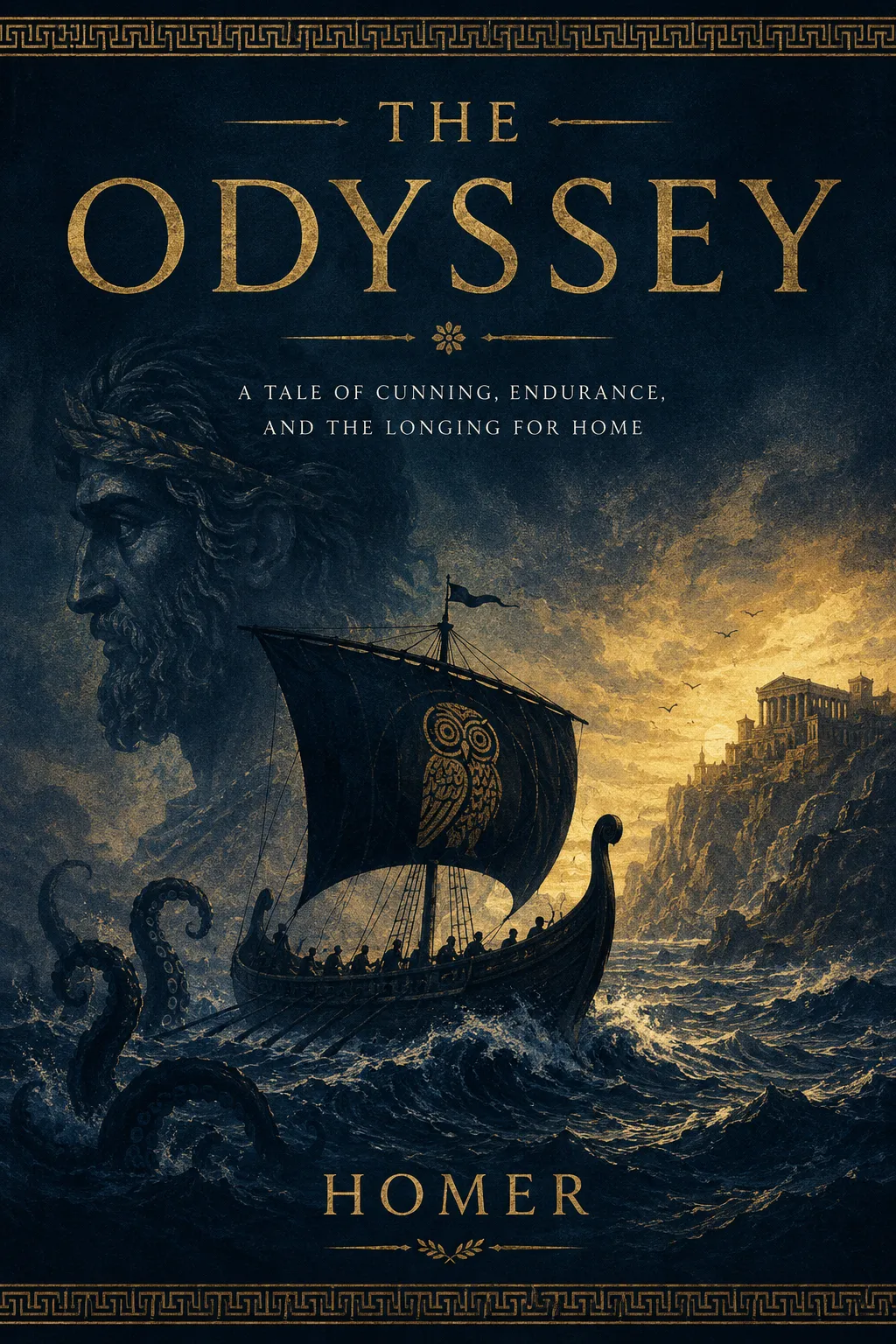
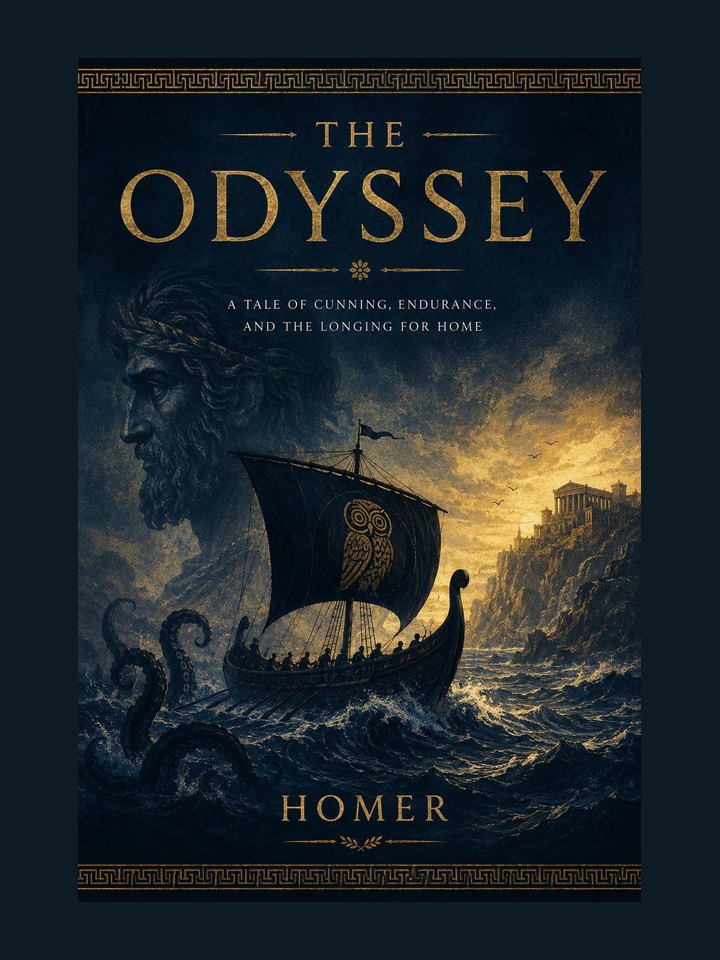
The Odyssey.
Odysseus’ decade-long voyage home from the Trojan War is a tale of cunning, endurance, and the unyielding pull of Ithaca. Homer’s epic explores the chaos of the human condition, where gods meddle, monsters lurk, and the heart’s longing for home becomes its greatest trial.
From $5.00
Choose an edition
Recommended for you.
Delivery shown before you pay
Options and costs for your address appear at checkout
30-day returns
Send it back if it didn't land
Always read first
Every book on the shelf has been read by at least one of us
Edition details
- Homer (tr. Butler)
- DotBooks
- Paperback
- Standard white
- 159
- en
Featured in
About this book
Homer’s The Odyssey is a sprawling, timeless journey that transcends mere adventure. It’s a story of resilience, wit, and the profound complexities of returning to a world that has moved on without you. Through Odysseus’ trials, we glimpse the fragility of human bonds and the enduring power of hope.
What it's about
After the fall of Troy, Odysseus embarks on a perilous journey back to Ithaca, where his wife Penelope and son Telemachus await. Along the way, he faces mythical creatures, vengeful gods, and the seductive allure of immortality. His voyage is not just a physical trek but a test of his ingenuity and resolve. Meanwhile, Penelope fends off suitors vying for her hand, and Telemachus searches for news of his father. The narrative weaves between Odysseus’ trials and the struggles of those he left behind, painting a vivid portrait of longing and loyalty.
Themes
At its core, The Odyssey is a meditation on the concept of home—not just as a place, but as an idea shaped by memory and identity. It explores the tension between fate and free will, as Odysseus navigates divine interventions and his own choices. The epic also delves into the nature of heroism, contrasting Odysseus’ cunning with the brute strength of figures like Achilles. Themes of loyalty, vengeance, and the passage of time resonate throughout, as characters grapple with the consequences of their actions and the inevitability of change.
Why it still matters
The Odyssey remains relevant because it captures the universal human experience of striving against insurmountable odds. Its exploration of identity, resilience, and the longing for belonging speaks to readers across centuries. The epic’s influence is evident in countless works of literature, from James Joyce’s Ulysses to modern retellings like Margaret Atwood’s The Penelopiad. It also offers a lens into ancient Greek culture, revealing their values, fears, and worldview. In a world still grappling with displacement and the search for meaning, Odysseus’ journey feels strikingly contemporary.
Who it's for
This epic is for readers who relish rich storytelling and timeless themes. It appeals to those fascinated by mythology, classical literature, or tales of adventure and survival. Fans of The Iliad, Virgil’s Aeneid, or contemporary adaptations of ancient stories will find much to admire. It’s also ideal for anyone drawn to narratives that explore the complexities of human nature and the enduring quest for home.
On reading it now
In 2026, The Odyssey feels both ancient and immediate. Its exploration of displacement, identity, and the human struggle against chaos resonates in an era of global uncertainty. Butler’s translation, with its clarity and rhythm, makes the text accessible without losing its poetic grandeur. Reading it today, we’re reminded that the challenges Odysseus faced—navigating a world of shifting allegiances and unseen forces—are not so different from our own.
Related reading
If this resonates, you might also reach for The Divine Comedy, The Iliad, or Shakespeare's Sonnets.
Story preview
Tap to flip through the photos and the key points.
 The Odyssey
Reader letters
What others said.
You might also like
Readers who picked this also reached for.

Picking up where you left off
Recently viewed.
From
$5.00