Books
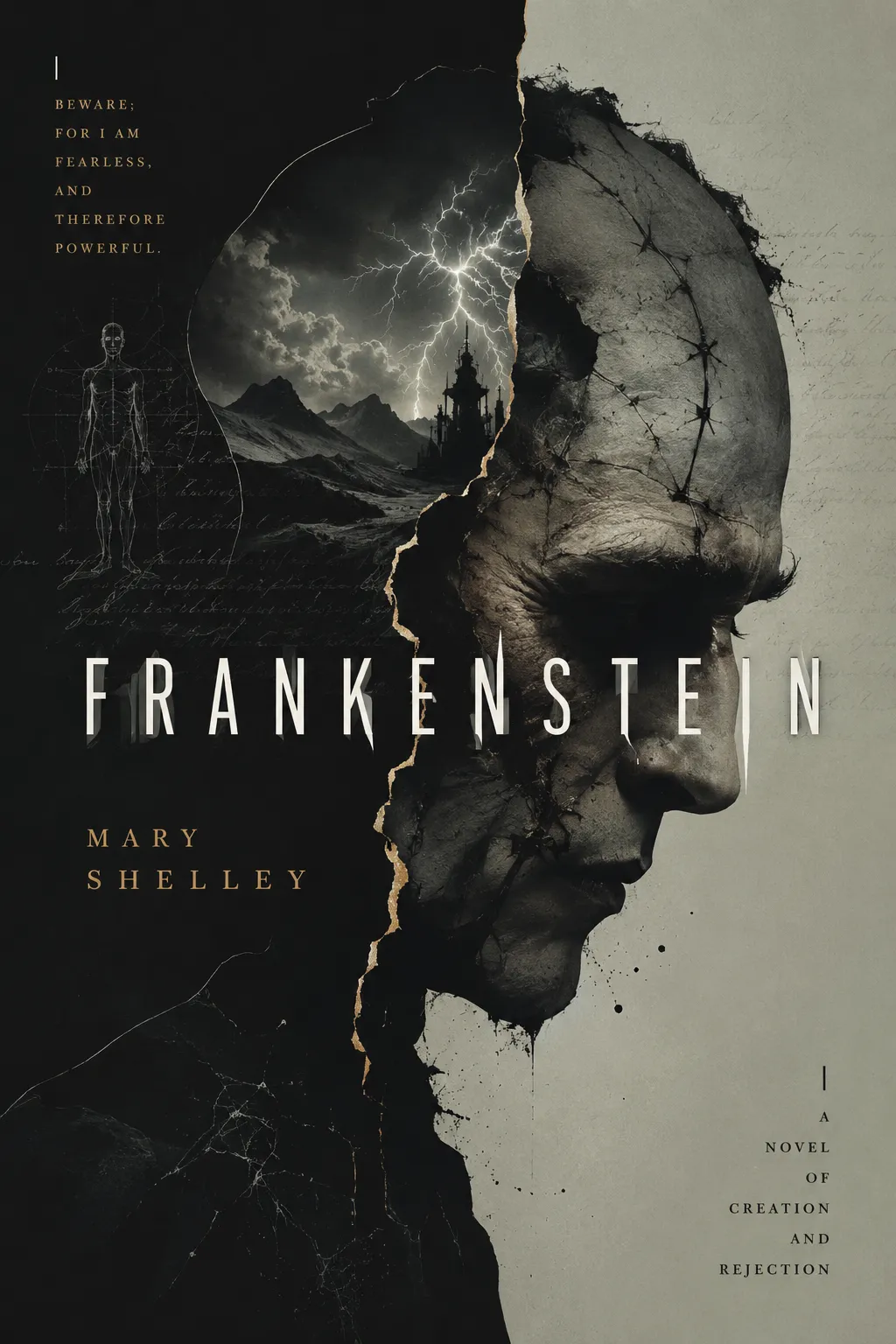
Frankenstein.
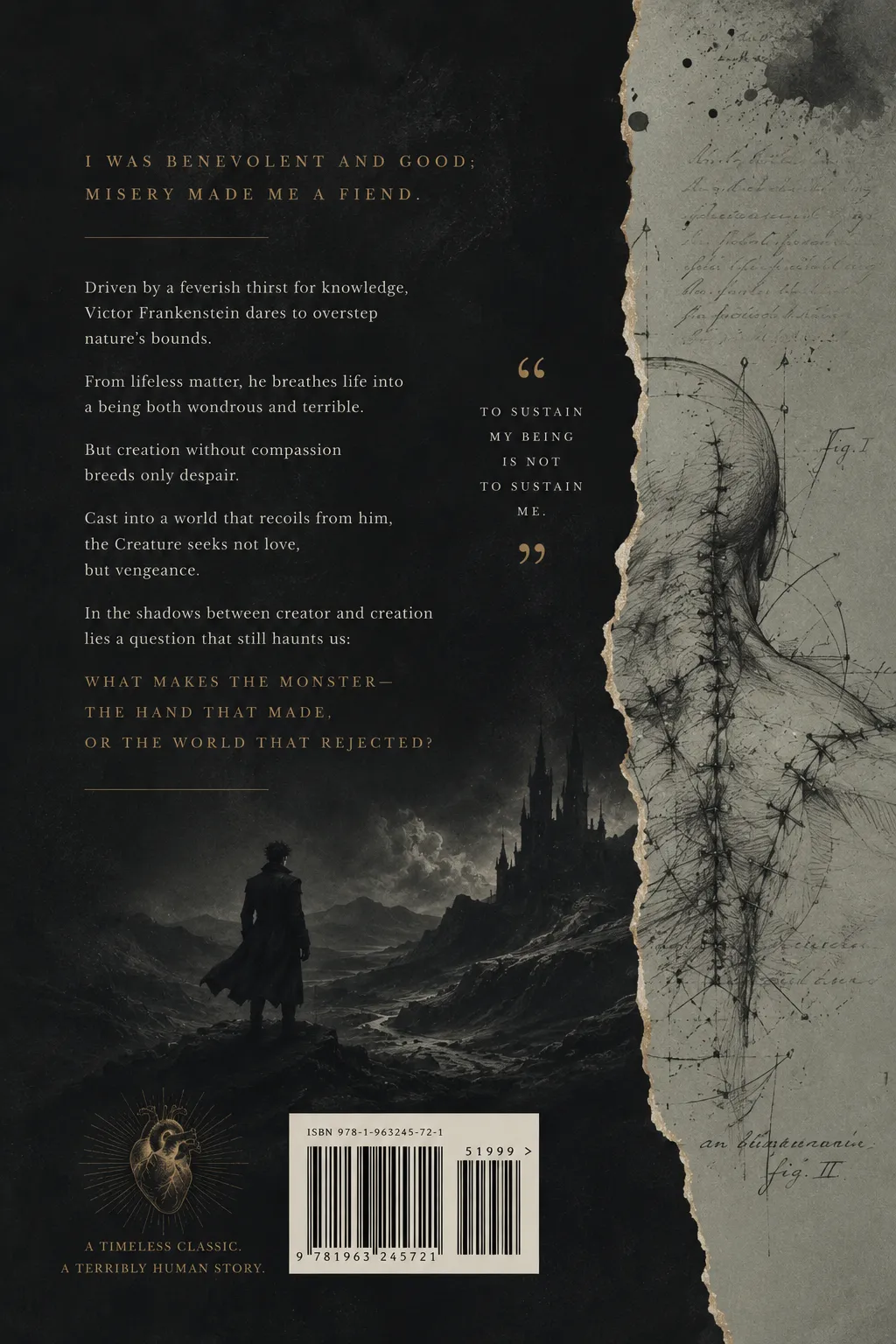
A scientist's reckless ambition births a sentient being—one whose loneliness curdles into rage. Shelley's novel is less a monster story than a chilling meditation on creation, abandonment, and the scars of rejection.
Choose an edition
Recommended for you.
Tracked, signed-for delivery on every order
Send it back if it didn't land
Every book on the shelf has been read by at least one of us
Edition details
- Mary Shelley
- DotBooks
- Paperback
- Standard white
- 99
- en
Featured in
About this book
Victor Frankenstein's obsession with animating lifeless flesh succeeds—horrifically. His creature, articulate and yearning, becomes a mirror to humanity's cruelty. This isn't just Gothic horror; it's a fever dream of parental neglect, scientific hubris, and the unbearable weight of existence.
What it's about
A young Geneva scholar, intoxicated by the promise of conquering death, assembles a living being from stolen body parts. When the creature awakens, Frankenstein recoils, abandoning his grotesque progeny. The narrative spirals outward—through the creature's self-education in a hovel, his bitter isolation, and his escalating demands for companionship from his creator. Their fates intertwine across icy wastes and Alpine peaks in a chase that questions who, exactly, is the real monster.
Themes
Shelley exposes the dark underbelly of creation: the moral vacuum when makers disown their creations. The novel pulses with questions of parental responsibility—Frankenstein's refusal to nurture what he wrought mirrors societal rejections of the 'other.' Equally potent is its interrogation of unchecked ambition; science, divorced from ethics, becomes a self-consuming fire. Woven throughout is the creature's heartbreaking search for belonging, turning him from victim to avenger.
Why it still matters
Nearly 200 years later, 'Frankenstein' remains the blueprint for anxieties about AI, genetic engineering, and creators dwarfed by their creations. Its core tragedy—the creature's eloquent suffering—resonates in debates about marginalization and the violence of exclusion. The book birthed sci-fi's existential dread while remaining a searing psychological study of alienation.
Who it's for
Readers who want horror with philosophical heft, or Gothic atmosphere paired with razor-sharp social critique. Fans of 'Dr. Jekyll and Mr. Hyde' or 'The Strange Case of the Albigenses' will recognize the moral duality, while admirers of Toni Morrison's 'Beloved' will find kinship in its themes of monstrous love and abandonment.
On reading it now
In an era of ChatGPT and CRISPR, Shelley's warning about creation without compassion feels prophetic. The creature's plea—'I ought to be thy Adam, but I am rather the fallen angel'—lands differently when our own 'monsters' are algorithms demanding accountability from their makers.
Related reading
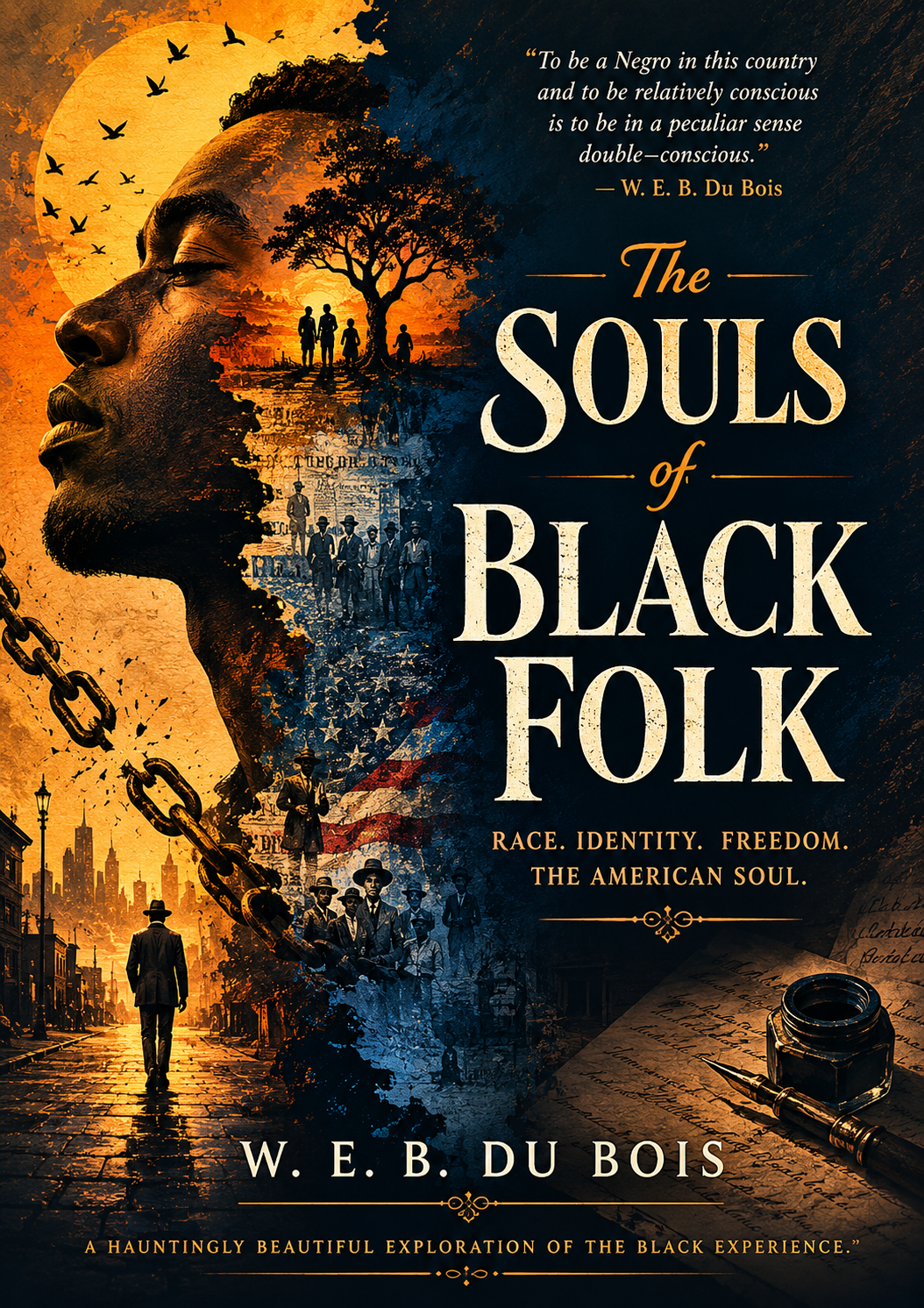
If this resonates, you might also reach for Civil Disobedience, Emma, or The Souls of Black Folk.
Sources and references
Verified references for this edition: Open Library, WorldCat.
Story preview
Tap to flip through the cover, snippets, and details.
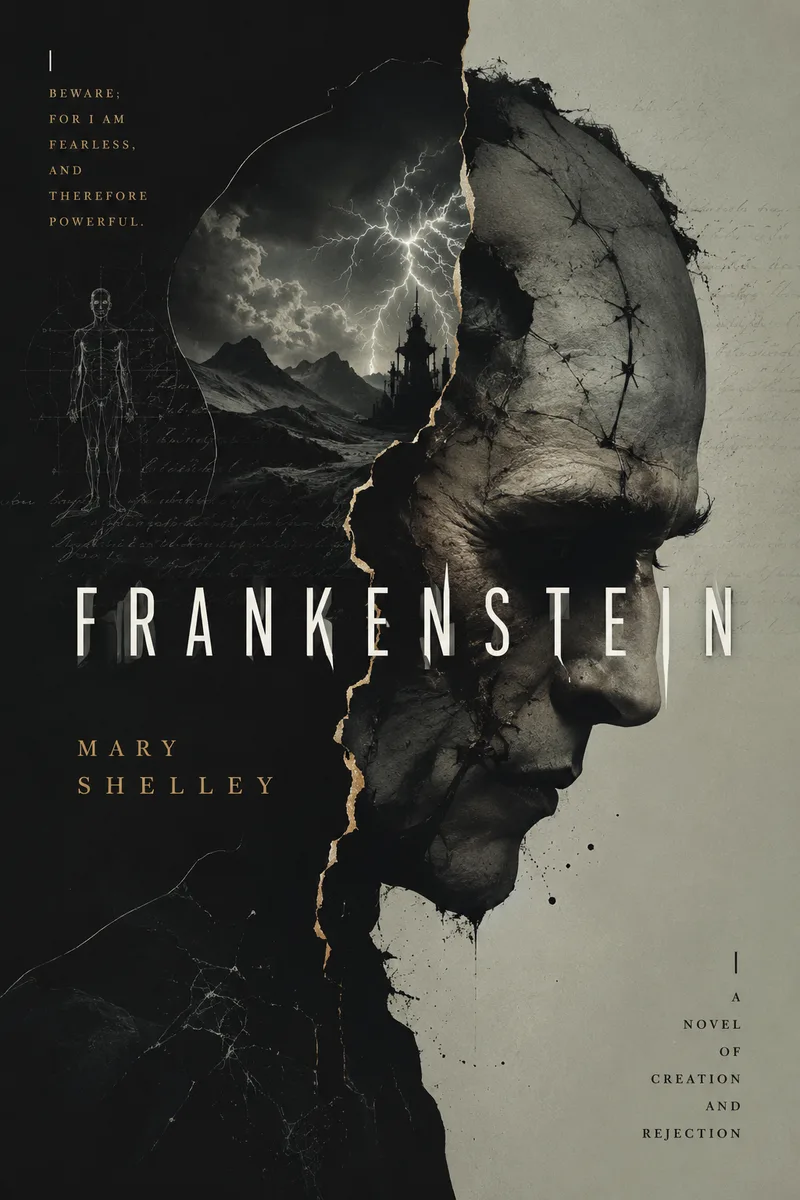 Frankenstein
You might also like
Readers who picked this also reached for.

Picking up where you left off