Books
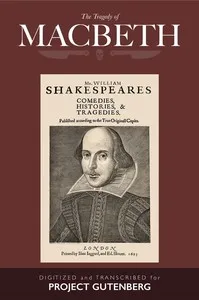
Macbeth.
A Scottish general’s ambition curdles into tyranny after a prophecy twists his fate. Shakespeare’s darkest play grips like a dagger hilt, weaving witchcraft, guilt, and the terrible cost of unchecked power.
Choose an edition
Recommended for you.
Tracked, signed-for delivery on every order
Send it back if it didn't land
Every book on the shelf has been read by at least one of us
Edition details
- William Shakespeare
- DotBooks
- Paperback
- Standard white
- 139
- en
Featured in
About this book
A storm brews over Scotland—not just thunder, but the kind that rattles men’s souls. When Macbeth hears a witches’ promise of kingship, the seed of ambition takes root. What follows is a harrowing unraveling: murder, madness, and a marriage poisoned by shared sin. This isn’t just a tragedy of fate; it’s a portrait of how power corrodes from the inside out.
What it's about
Macbeth, a loyal warrior, returns from battle victorious—until three witches whisper that he’ll one day rule. Spurred by their prophecy and his wife’s ruthless ambition, he murders King Duncan to seize the throne. But blood begets blood. Paranoia tightens its grip as Macbeth orders more killings to secure his stolen crown, while Lady Macbeth’s fierce resolve fractures under the weight of guilt. The play hurtles toward its inevitable end, where ambition’s price is paid in full.
Themes
Shakespeare probes the seductive danger of unchecked ambition, showing how it warps morality and human connection. The supernatural lurks at the edges—not just in the witches’ prophecies, but in the eerie disintegration of Macbeth’s mind. Gender also simmers beneath the surface: Lady Macbeth’s infamous plea to "unsex" herself reveals the violent expectations placed on power, masculinity, and complicity.
Why it still matters
Centuries later, Macbeth remains a mirror for our own political and personal hungers. Its exploration of how power corrupts—and how guilt manifests—feels unnervingly modern. The play’s psychological depth has influenced everything from crime dramas to studies of tyranny, proving that some human flaws are timeless. Its language, too, seeps into culture: phrases like "sound and fury" and "dagger of the mind" still resonate.
Who it's for
Readers who crave tension that coils like a spring, moral complexity, and prose that crackles with visceral imagery. If you’ve ever wondered how far you’d go for power—or recoiled at the answer—this is for you. Fans of Breaking Bad or The Godfather will recognize the same descent into moral ruin.
On reading it now
In an era of political upheaval and ruthless ambition, Macbeth feels less like a relic and more like a warning. The play’s questions—about accountability, the supernatural, and the cost of ambition—echo in today’s world. Its brevity (Shakespeare’s shortest tragedy) makes its impact all the more concentrated: a single, gut-punch of a play that lingers long after the final act.
Related reading
If this resonates, you might also reach for Romeo and Juliet, Hamlet, or Persuasion.
Sources and references
Verified references for this edition: Open Library, WorldCat.
Story preview
Tap to flip through the cover, snippets, and details.
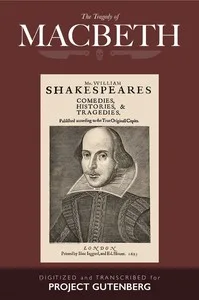 Macbeth
You might also like
Readers who picked this also reached for.

Picking up where you left off