Books
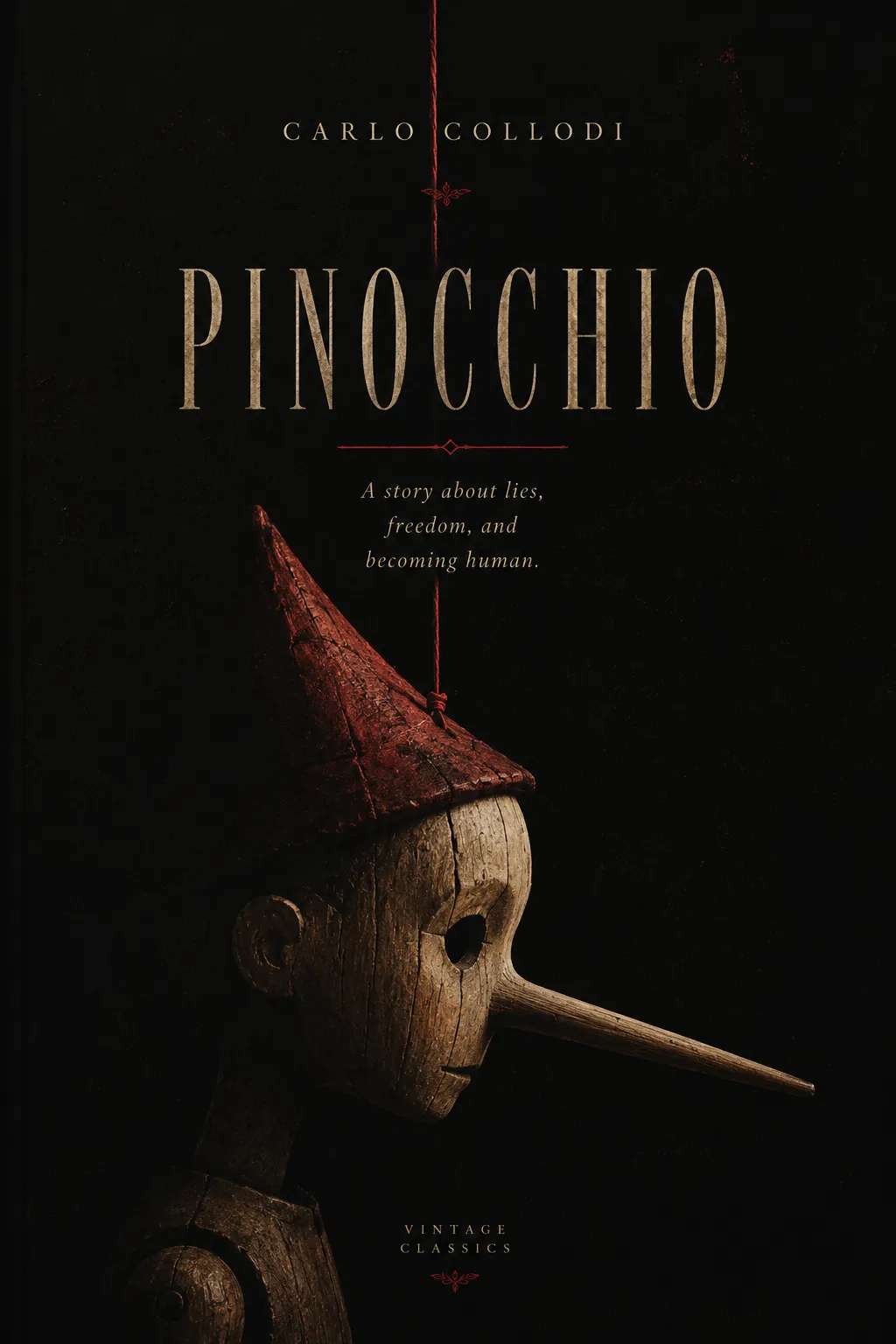
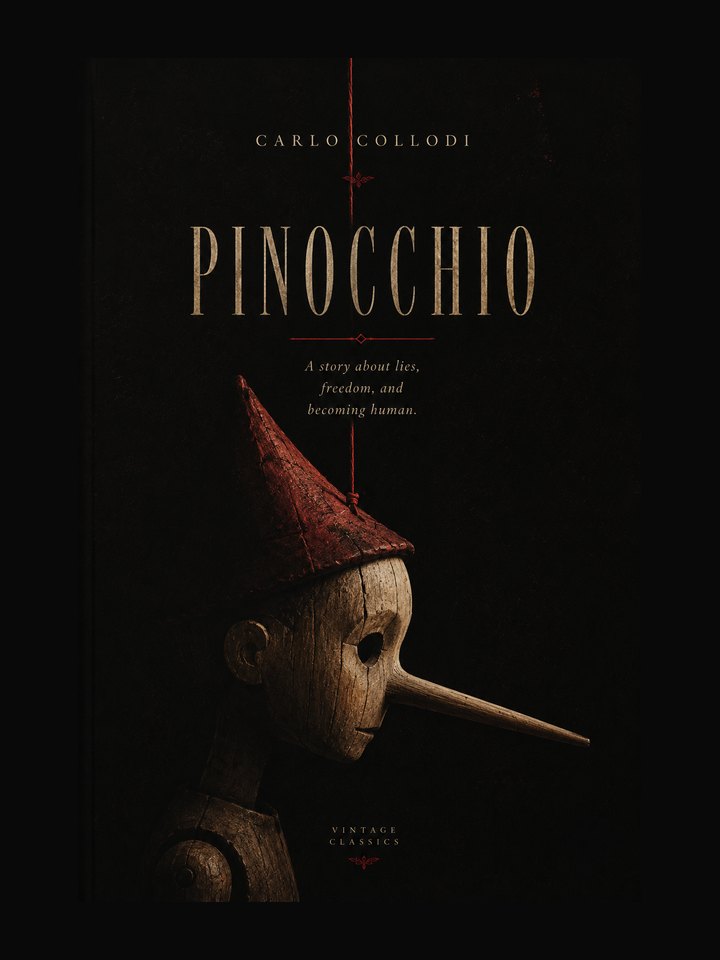
The Adventures of Pinocchio.
A wooden puppet’s journey from mischievous marionette to real boy is a darkly enchanting tale of folly, transformation, and the cost of growing up. Collodi’s Italy brims with moral lessons wrapped in humor, magic, and a touch of menace.
Choose an edition
Recommended for you.
Options and costs for your address appear at checkout
Send it back if it didn't land
Every book on the shelf has been read by at least one of us
Edition details
- Carlo Collodi
- DotBooks
- DotBooks
- Paperback
- Standard white
- 189
- en
Featured in
About this book
In a world where lies sprout noses and boys turn into donkeys, Carlo Collodi’s The Adventures of Pinocchio unfolds as a darkly whimsical parable of disobedience and redemption. This tale of a wooden puppet’s quest to become 'real' is as much a cautionary fable as it is a story of transformation, blending biting humor with eerie magic.
What it's about
Pinocchio begins as a mischievous wooden puppet carved by the kind-hearted Geppetto, who dreams of raising him as a son. But Pinocchio’s journey to becoming a real boy is fraught with misadventures: he skips school, falls in with dubious characters, and repeatedly strays from the path of virtue. Along the way, he encounters a cast of memorable figures, from the cunning Fox and Cat to the wise Cricket, whose warnings he often ignores. His trials—from being tricked into a puppet show to nearly becoming a donkey—serve as moral lessons, each bringing him closer to understanding the consequences of his choices.
Themes
At its core, The Adventures of Pinocchio explores the tension between freedom and responsibility. Pinocchio’s disobedience and impulsivity symbolize the universal struggle of growing up, while his eventual transformation into a real boy underscores the redemptive power of love and self-awareness. The story also delves into themes of truth and deception, as Pinocchio’s lies literally grow his nose, serving as a physical manifestation of moral failing. Collodi’s Italy is a world where actions have immediate, often fantastical consequences, reinforcing the idea that ethical behavior is not just a societal expectation but a personal necessity.
Why it still matters
Over a century after its publication, The Adventures of Pinocchio remains a touchstone in children’s literature, its blend of humor, moral instruction, and surreal imagery continuing to captivate readers. Its themes of transformation and accountability resonate in an age where the boundaries between truth and fiction are increasingly blurred. The story’s enduring appeal lies in its ability to entertain while imparting timeless lessons about the complexities of human nature. Adaptations in film, theater, and literature attest to its cultural significance, ensuring that Pinocchio’s journey remains a part of the global imagination.
Who it's for
This book is for readers who appreciate stories that balance whimsy with moral depth, and for those who enjoy classic tales with a darker edge. Fans of Alice’s Adventures in Wonderland or The Wizard of Oz will find a kindred spirit in Pinocchio’s surreal adventures. It’s also ideal for anyone interested in exploring the origins of modern children’s literature or the ways in which folklore and fairy tales shape our understanding of morality.
On reading it now
Reading The Adventures of Pinocchio today offers a chance to revisit a story that has shaped countless childhoods, yet retains its ability to surprise and provoke. Its blend of humor, moral lessons, and fantastical elements feels both timeless and refreshingly strange, reminding us that the path to becoming 'real' is as much about confronting our flaws as it is about embracing our humanity.
Related reading
If this resonates, you might also reach for Grimms' Fairy Tales, The Jungle Book, or Peter Pan.
Sources and references
Verified references for this edition: Open Library.
Story preview
Tap to flip through the photos and the key points.
 The Adventures of Pinocchio
You might also like
Readers who picked this also reached for.
Picking up where you left off