Books
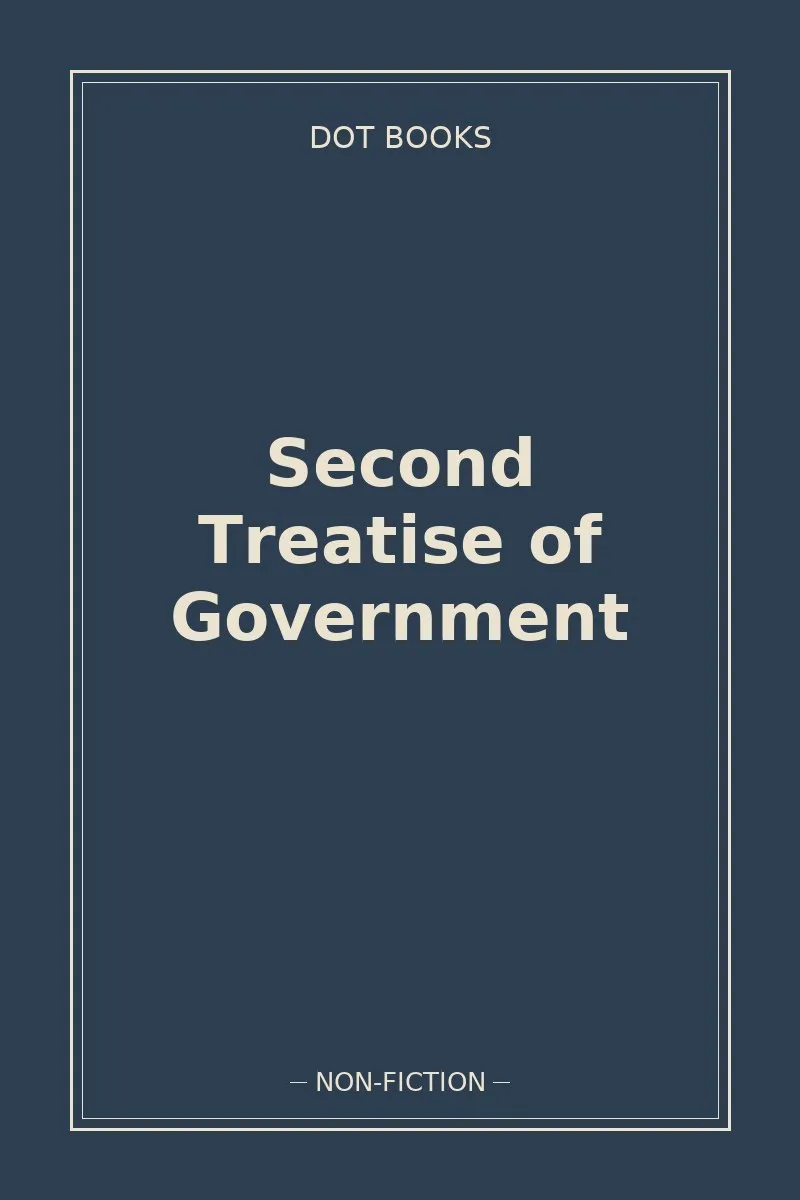
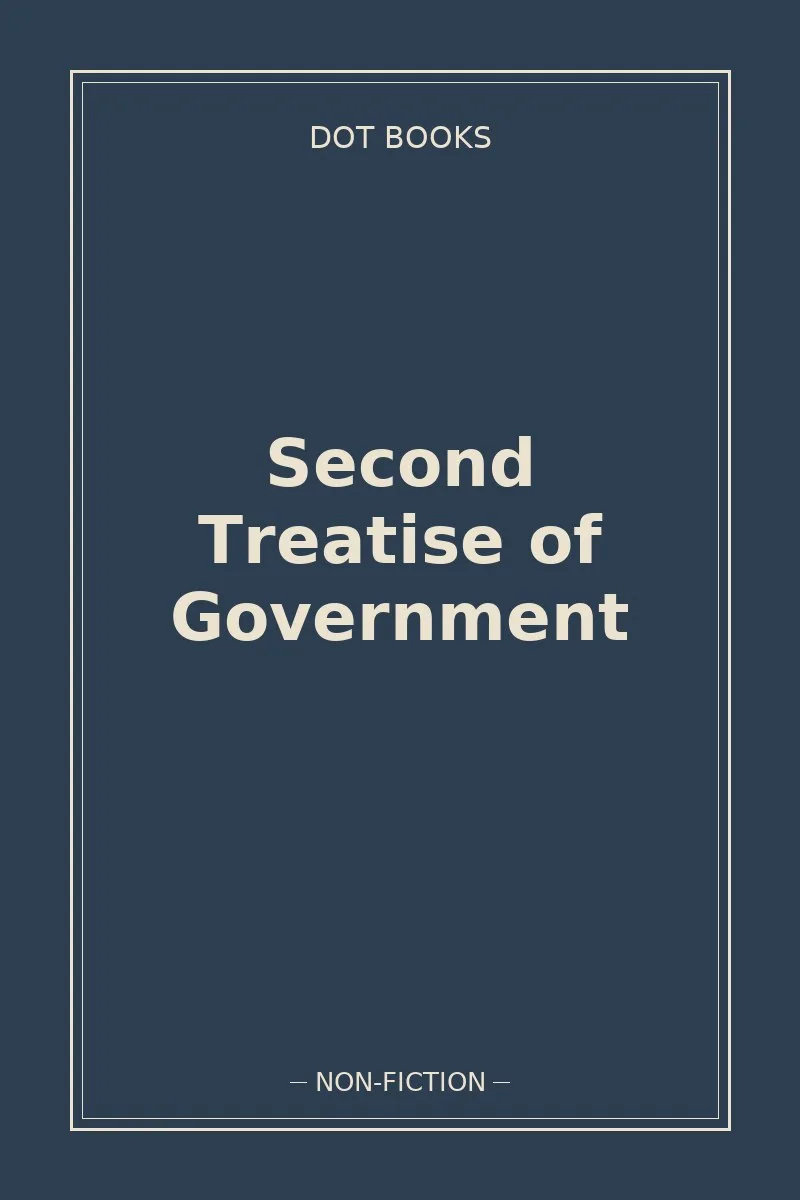
Second Treatise of Government.
John Locke's foundational argument for natural rights, consent and limited government. The quiet book behind revolutions, still the clearest case ever made that political power belongs to the governed, not their rulers.
Choose an edition
Recommended for you.

Tracked, signed-for delivery on every order
Send it back if it didn't land
Every book on the shelf has been read by at least one of us
Edition details
- John Locke
- DotBooks
- Paperback
- Standard white
- 207
- en
About this book
Few short books have shaped the modern world so profoundly. Locke's Second Treatise of Government is where the language of natural rights, government by consent and the right to resist tyranny found its most influential expression.
What it's about
Locke begins with a thought experiment: imagine people in a state of nature, before any government exists. There, he argues, all are free and equal, and each holds natural rights to life, liberty and property. Government arises not from divine appointment or brute conquest but from a compact, as free people agree to entrust limited authority to protect what is already theirs. From this foundation Locke builds a theory of legitimate power, the separation of legislative and executive functions, the primacy of the rule of law, and, most explosively, the people's right to dissolve a government that betrays its trust.
Themes
Consent, property and the limits of authority run through every chapter. Locke insists that power held without consent is illegitimate, and that no ruler stands above the law. He grounds property in labour, the idea that mixing one's work with the world creates a right to its fruits, an argument that would echo through economics for centuries. Beneath it all lies a conviction that political authority is a trust, revocable when abused.
Why it still matters
Read the American Declaration of Independence and you are reading Locke rephrased. His fingerprints are on constitutions, bills of rights and revolutions across the globe. But the Second Treatise is not a museum piece. Its questions, what makes power legitimate, when may a people withdraw their consent, how far property rights extend, remain the live wires of political argument. To understand liberal democracy and its critics alike, you have to start here.
Who it's for
Students of politics, history and philosophy, and any citizen who wants to trace their own rights back to their source. Demanding but lucid, it rewards patient reading with ideas that still structure how we argue about freedom.
Story preview
Tap to flip through the cover, snippets, and details.
 Second Treatise of Government
You might also like
Readers who picked this also reached for.
Picking up where you left off