Books
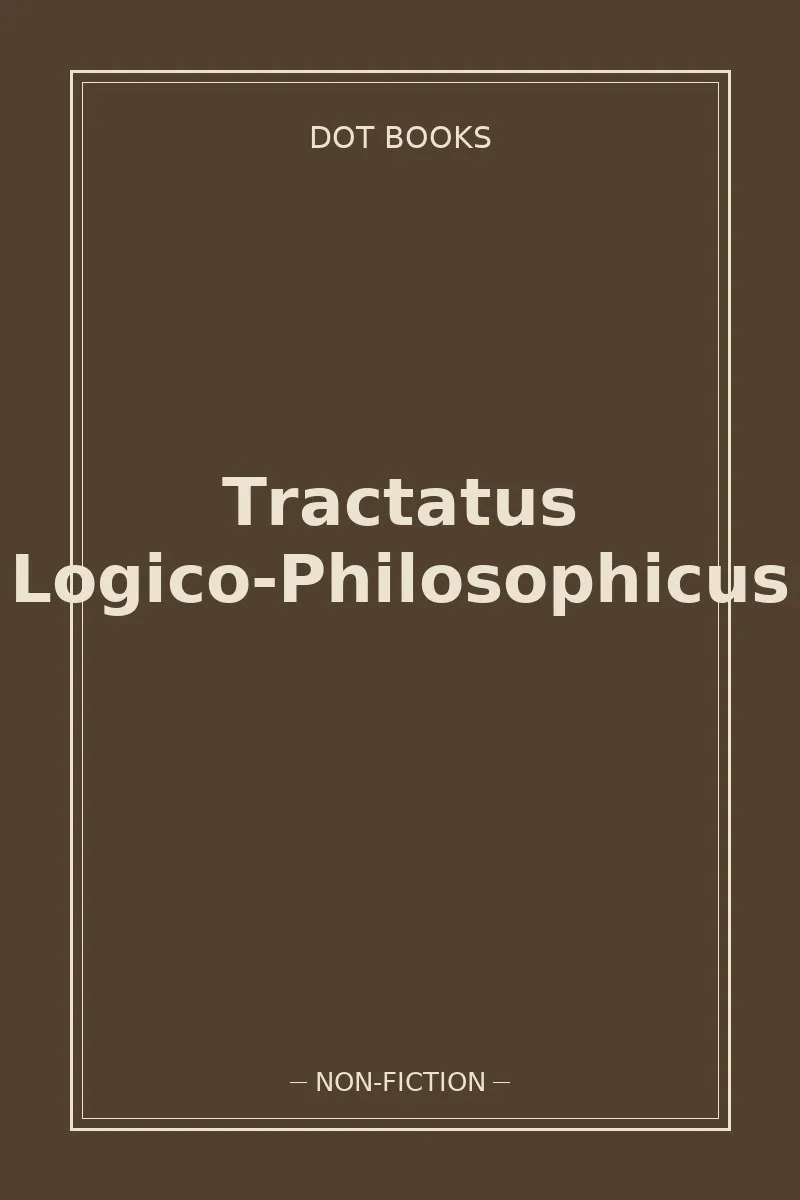
Tractatus Logico-Philosophicus.
Ludwig Wittgenstein's austere masterpiece on language, logic and the limits of what can be said. In numbered propositions of crystalline severity, it maps the boundary between sense and silence — and ends by pointing beyond it.
Choose an edition
Recommended for you.

Tracked, signed-for delivery on every order
Send it back if it didn't land
Every book on the shelf has been read by at least one of us
Edition details
- Wittgenstein, Ludwig
- DotBooks
- DotBooks
- Paperback
- Standard white
- 173
- en
About this book
In a series of numbered propositions, spare almost to the point of poetry, a young philosopher sets out to draw the limits of language itself, and closes with the famous counsel that whereof we cannot speak, we must remain silent.
What it's about
Ludwig Wittgenstein's Tractatus Logico-Philosophicus is a compact, rigorously structured work of philosophy that examines the relationship between language, thought and the world. Building through a cascade of numbered statements, it develops a picture of how propositions represent reality, works out the nature of logic, and argues that the meaningful use of language has definite limits. Beyond those limits lie the things that matter most — ethics, the mystical, the meaning of life — which, on his account, cannot be put into words but only shown.
Themes
The book is concerned with meaning, logic and the boundary of the sayable. It distinguishes what can be stated clearly from what can only be shown or passed over in silence, and in doing so raises profound questions about the reach of philosophy itself and the place of the ineffable.
Why it still matters
The Tractatus is one of the most influential works of twentieth-century philosophy, shaping logical positivism and the whole analytic tradition, even as Wittgenstein himself later challenged its conclusions. Its austere beauty and its haunting final propositions have fascinated readers far beyond professional philosophy. Few short books demand, or repay, more thought.
Who it's for
For students of philosophy, logic and language, for readers willing to work slowly through a demanding text, and for anyone drawn to the point where rigorous argument touches the edge of what can be said at all.
Sources and references
Verified references for this edition: Open Library, WorldCat.
Story preview
Tap to flip through the cover, snippets, and details.
 Tractatus Logico-Philosophicus
You might also like
Readers who picked this also reached for.
Picking up where you left off